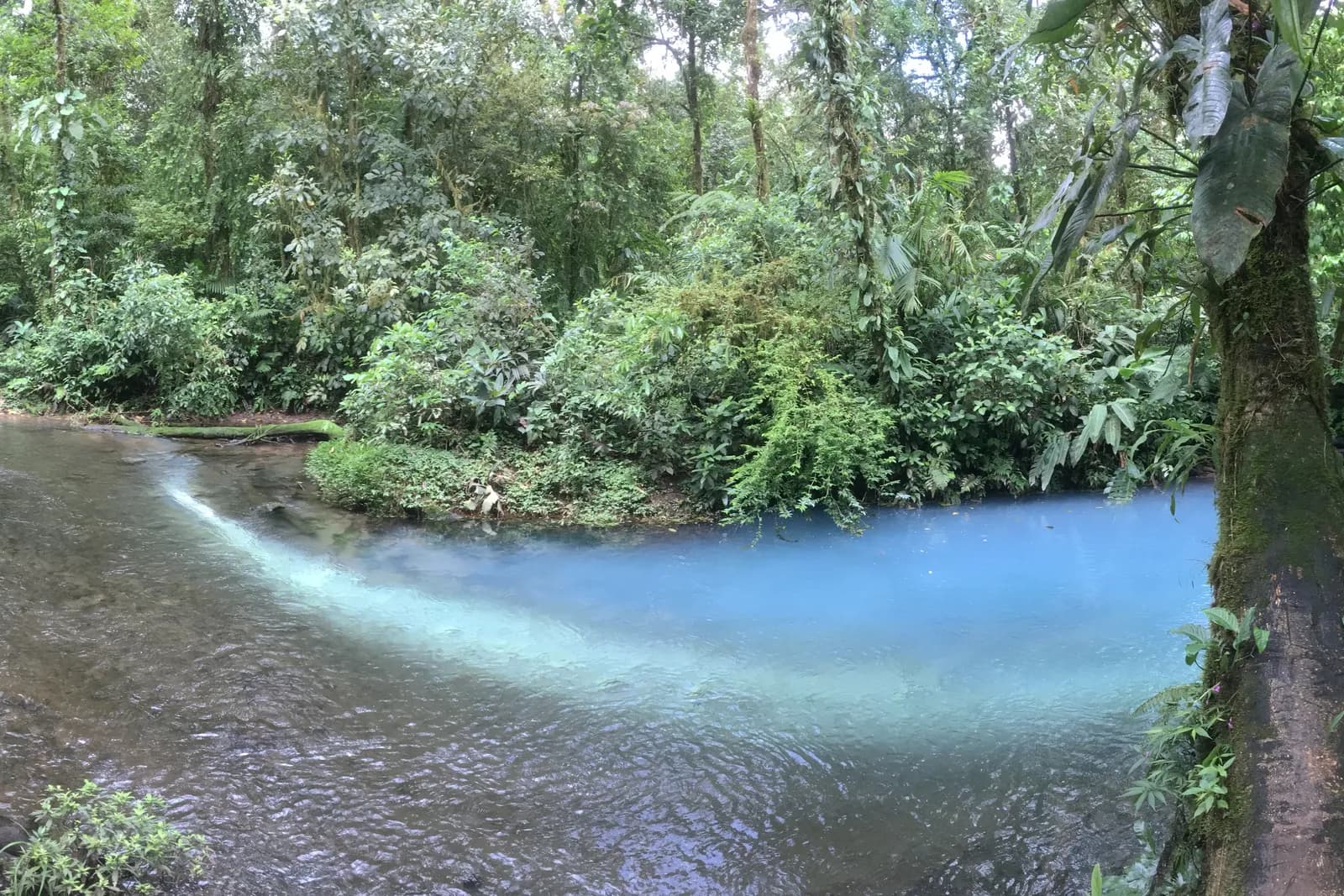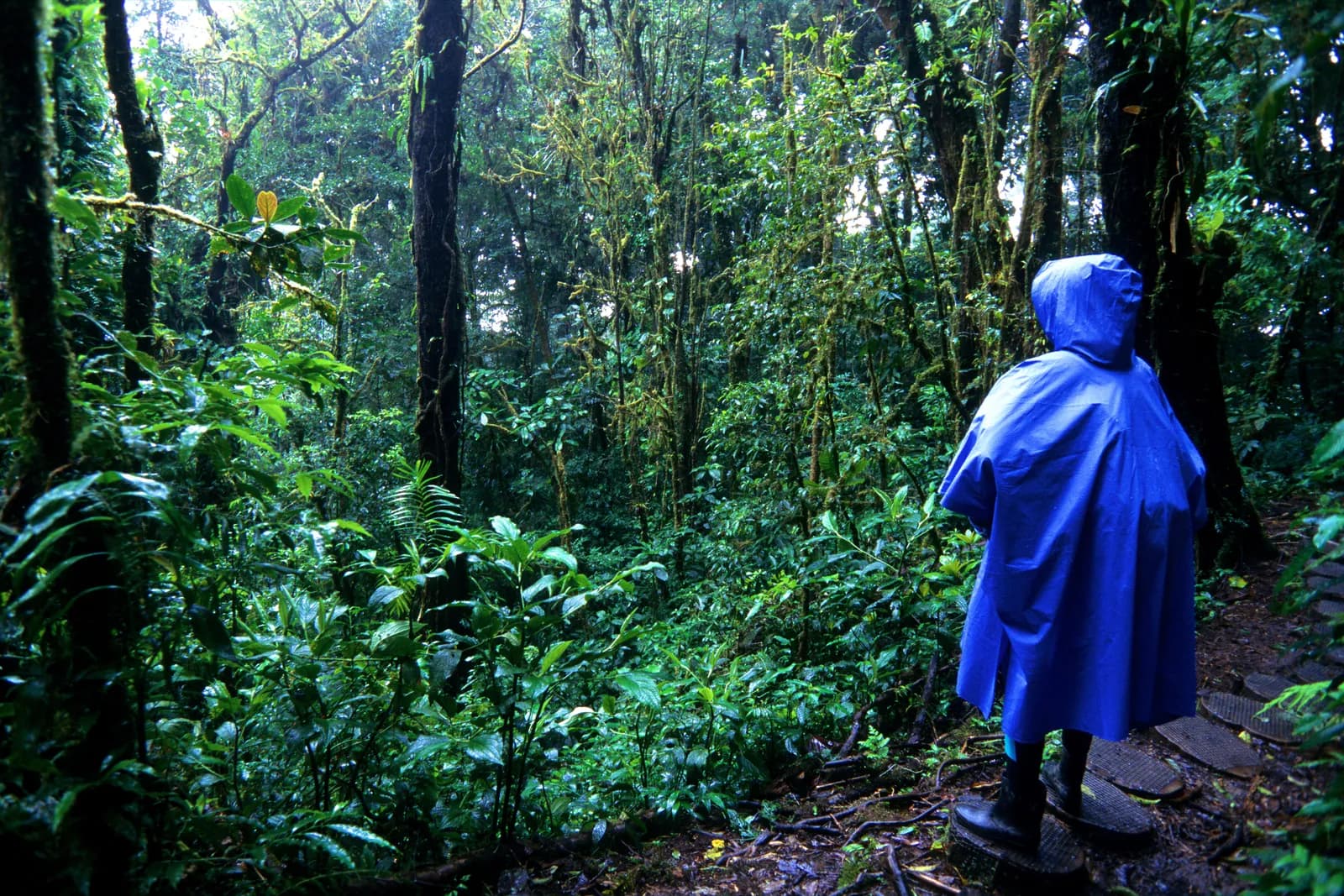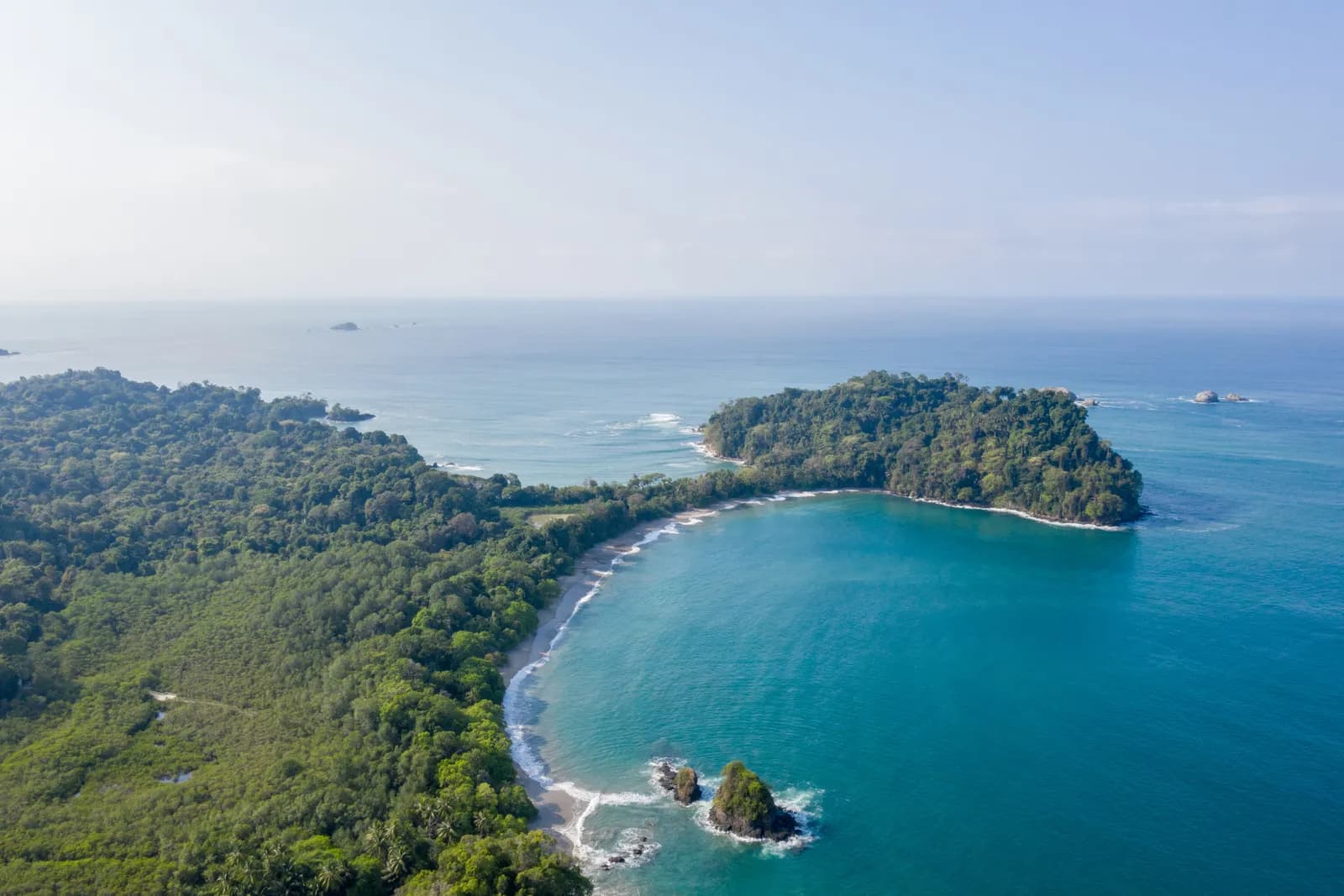
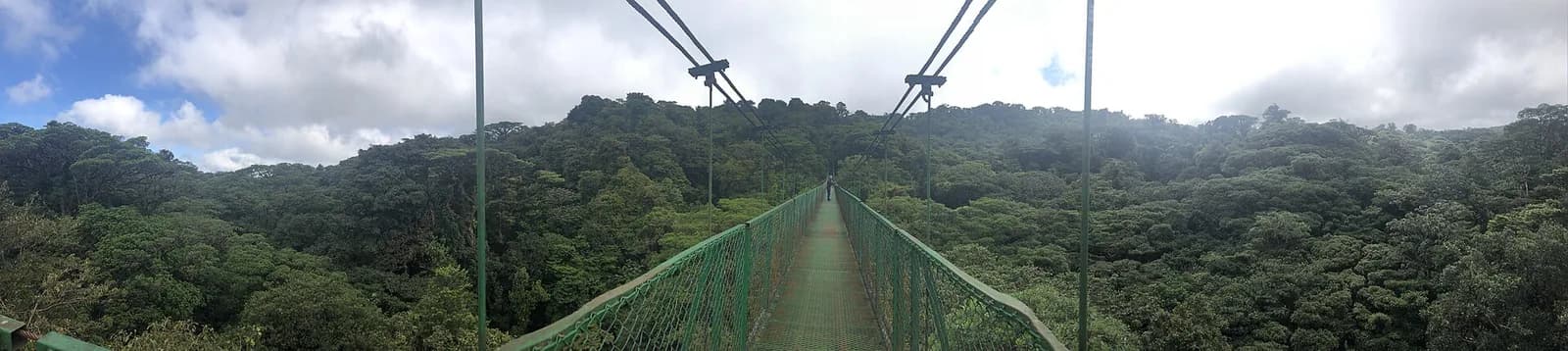
Perched high in the Tilaran Mountains and wrapped in near-permanent mist, Monteverde is one of those rare places that lives up to every photograph you have ever seen of it. This is the cloud forest: a cooler, greener, moodier world than the beaches most visitors picture when they imagine Costa Rica, and for many travelers it becomes the most memorable stop of the entire trip. Here you can walk suspended bridges through the treetops, fly across canyons on some of the country's longest ziplines, search the branches for the almost mythical resplendent quetzal, and fall asleep to the sound of the forest instead of traffic.
This guide is written the way a local guide would explain Monteverde to a friend arriving for the first time: honestly, in detail, and with the small practical tips that make the difference between a good visit and a great one. You will find exactly how to get here, when to come, what to do, where to sleep and eat, and the mistakes that catch first-timers off guard. Whether Monteverde is your first Costa Rica destination or your second, by the end you will know precisely how to fit it into your itinerary and make the most of every misty morning.
Table of Contents
- Why Visit Monteverde?
- Where Is Monteverde?
- How to Get to Monteverde
- Best Time to Visit Monteverde
- Top Things to Do in Monteverde
- How Many Days Should You Spend in Monteverde?
- Where to Stay
- Best Restaurants
- Getting Around Monteverde
- Wildlife You Can See
- Practical Travel Tips
- Common Mistakes Tourists Make
- Suggested Itinerary for Monteverde
- Frequently Asked Questions
- Final Thoughts
Why Visit Monteverde?
Monteverde protects one of the last great cloud forests in Central America, and standing inside it feels genuinely different from anywhere else in Costa Rica. At elevations between roughly 1,400 and 1,800 meters, Atlantic trade winds rise against the mountains, cool, and condense into a fine mist that hangs in the canopy almost year-round. That constant humidity feeds an extraordinary tangle of life: mosses, bromeliads, orchids and strangler figs draped over every branch, with hummingbirds and quetzals moving through the fog.
The numbers behind the beauty are impressive. The main Monteverde Cloud Forest Biological Reserve alone shelters more than 2,500 plant species, around 100 species of mammals, over 400 bird species, and roughly 120 reptiles and amphibians. This is the home of the resplendent quetzal, the three-wattled bellbird, sloths, howler and capuchin monkeys, coatis, and hundreds of species most visitors have never heard of.
But Monteverde is more than a nature reserve. It is an activity hub, home to Costa Rica's original canopy zipline tours and some of its most dramatic hanging bridges, layered on top of a small, welcoming community with roots in the Quaker families who settled here in the 1950s and helped create the reserve in 1972. You come for the wildlife and the adrenaline, and you leave remembering the atmosphere: cool air, coffee, and a forest that seems to breathe.
Where Is Monteverde?
Monteverde sits in the Puntarenas province of north-central Costa Rica, along the Continental Divide in the Cordillera de Tilaran. Geographically it straddles two worlds: from certain viewpoints inside the reserves, especially La Ventana on the Continental Divide Trail, you can look toward the Pacific and, on exceptionally clear days, the Caribbean slope. That position on the divide is exactly what creates the cloud forest's signature weather.
When people say Monteverde, they usually mean a cluster of small communities rather than a single town. The commercial heart is Santa Elena, the village where you will find most hotels, restaurants, tour agencies, banks and shops. A few kilometers uphill toward the reserve is the community of Monteverde proper, along with Cerro Plano in between. The famous Monteverde Cloud Forest Biological Reserve lies at the end of the road southeast of Santa Elena, while the Santa Elena Reserve sits to the northeast, and Curi-Cancha is tucked between town and the main reserve.
For orientation on your wider Costa Rica map: Monteverde is about 152 kilometers and 3.5 hours from the capital, San Jose, and roughly 3 hours from Liberia in the northwest. It pairs naturally with La Fortuna and Arenal Volcano, which sit just across Lake Arenal, close as the crow flies but reached by a scenic detour because no direct road crosses the lake.
How to Get to Monteverde
Getting to Monteverde is part of the adventure. The region is mountainous, and while the main highways are paved, the final climb into Santa Elena includes stretches of rough, sometimes unpaved road. Here are your main options.
Rental Car
A rental car gives you the most freedom, letting you explore multiple reserves, stop for photos and reach hotels along the reserve road on your own schedule. A 4x4 (SUV) is strongly recommended, especially in the green season, because of the steep, gravelly final approach. Budget roughly $45 to $75 per day including insurance, and always confirm your policy covers unpaved roads. Fill your tank before the last leg, because services thin out as you climb. Allow about 4 hours from San Jose if you are driving yourself (a professional driver covers the same 152 kilometers in about 3.5 hours), roughly 3 hours from Liberia airport, about 3.5 hours from La Fortuna by road around the lake, and 4.5 to 5 hours from Manuel Antonio.
Private Transportation
The most comfortable option, and the one most first- and second-time visitors ultimately prefer. A private driver collects you door-to-door, handles the mountain roads and often shares local knowledge along the way, with no navigation stress and no luggage juggling. It is ideal for families, groups and anyone who would rather arrive relaxed. Our private transfer from San Jose to Monteverde starts at $250 and covers 1 to 4 passengers, with $10 per additional passenger from the fifth onward. It is also the smoothest way to chain destinations together, for example San Jose to Monteverde to La Fortuna, without renting a car.
Shared Shuttle
Shared tourist shuttles are the sweet spot for budget-conscious travelers who still want comfort. Air-conditioned vans run daily from the major hubs, picking up at central points or hotels. Expect around $50 to $65 per person from San Jose and similar from Liberia, with morning and afternoon departures. Shuttles are reliable, but they run on fixed schedules and make multiple stops, so allow extra time.
Public Bus
The cheapest route by far. Direct buses leave San Jose from the Terminal 7-10 area (typically around 6:30 a.m. and 2:30 p.m.) and take roughly 4.5 to 5 hours for only a few dollars. It is an authentic, wallet-friendly experience, but slower and less flexible, with limited luggage space. Confirm current schedules locally, because departure times change seasonally.
The Jeep-Boat-Jeep from La Fortuna
Because no road crosses Lake Arenal, the classic connection between La Fortuna and Monteverde is the Jeep-Boat-Jeep, also called Van-Boat-Van. A minibus takes you to the lakeshore, a covered boat crosses in front of Arenal Volcano (about 30 to 45 minutes, and genuinely one of the most scenic transfers in the country), and a second van climbs to Monteverde on the other side. Total door-to-door time is about 3 to 3.5 hours, typically $33 to $40 per person, with departures usually around 8:00 to 8:30 a.m. and 2:00 to 2:30 p.m. It is faster, cheaper and far more beautiful than the long drive around the lake, and much better than the 8-hour public-bus route via Tilaran. If Arenal is also on your list, our La Fortuna travel guide covers that side of the trip in detail.
Planning tip from the ground: Whatever option you choose, build in buffer time. Mountain weather and road conditions can slow any transfer, and arriving with daylight to spare makes finding your hotel far easier. ISA Travel can arrange private transfers and airport pickups so you can focus on the forest, not the road.
Best Time to Visit Monteverde
Monteverde has its own microclimate, and understanding it will shape your whole visit. Daytime temperatures hover around 16 to 22 degrees Celsius (60 to 72 Fahrenheit) year-round, dropping to roughly 14 degrees Celsius (57 Fahrenheit) at night. It is cooler, windier and mistier than most of Costa Rica, so pack layers and a rain jacket in every season, because a clear morning can turn to drizzle by lunch. For forecasts close to your dates, the Instituto Meteorologico Nacional is the official source.
Dry Season (roughly December to April)
This is the high season and the most popular time to visit, with generally more sunshine and reliable trail conditions. Note that December through February also brings the strongest winds along the Continental Divide, which can make the canopy feel raw and occasionally close ziplines briefly. Book hotels and tours well in advance, because this window fills up.
Green Season (roughly May to November)
The green season is when the forest is at its most alive: lush, dripping and vivid. Crowds thin out, prices soften and wildlife is very active. Rain typically comes in afternoon bursts rather than all-day downpours, so mornings are often ideal for hiking and tours. Bring good rain gear and embrace the atmosphere; many locals consider this the most magical time in the cloud forest. For how the seasons play out across the whole country, see our month-by-month guide to the best time to visit Costa Rica.
Wildlife and Birdwatching Seasons
For the resplendent quetzal, the bird most visitors dream of, the prime window is roughly March through June, peaking during nesting season around April, when a knowledgeable guide can find them with a high success rate. Outside that period sightings still happen but are far less likely. General wildlife activity is best in the early morning across all seasons.
Photography
Early morning delivers the best light and the most active animals, while the shifting mist creates the moody, ethereal images Monteverde is famous for. Bring a rain cover for your gear, pack a lens cloth for constant condensation, and do not chase blue skies. In a cloud forest, the fog is the shot.
Top Things to Do in Monteverde
Monteverde packs an unusual number of world-class experiences into a small area. Here are the essentials, each worth building your days around.
Monteverde Cloud Forest Reserve
The original and most famous reserve, established in 1972 and managed by the non-profit Tropical Science Center, protecting roughly 10,500 hectares of pristine cloud forest. Important recent change: in December 2025 the reserve replaced its all-day pass with a circuit system. You now choose one of three one-way routes: the shorter Essence Trail (about 1.4 km, with a waterfall), the mid-length Heart of Forest Trail (about 2.8 km, including a hanging bridge), or the Continental Divide Trail (about 4.1 km, with a hanging bridge and the dual-coast La Ventana viewpoint). Each costs around $29 per adult, with reduced rates for children and residents, and there is no re-entry, so pick your route thoughtfully. Places are capped per time slot and sell out early in high season, so book ahead through the official reserve website. Open daily 7 a.m. to 4 p.m. Arrive right at opening for the best wildlife and the thinnest crowds, and strongly consider a licensed guide: they carry spotting scopes and know exactly where the quetzals, sloths and rare birds are.
Hanging Bridges
Walking suspension bridges through the canopy is a quintessential Monteverde experience, letting you stand eye-level with the treetops and look for birds and monkeys from above. Selvatura Park offers about 3 km of treetop walkways crossing eight bridges (some up to 170 meters long and 60 meters high), while Sky Adventures' Sky Walk is another excellent option. You can do the bridges self-guided or with a naturalist; a guide is well worth it if you want to actually spot wildlife rather than just enjoy the views. Allow 1.5 to 2 hours at a relaxed pace.
Ziplining
Monteverde helped invent canopy zipline tourism, and it remains one of the best places on earth to do it. Selvatura Park features around 13 cables built inside the cloud forest, including one roughly 1 km long, plus a Tarzan swing and an optional Superman line where you fly head-first. Other strong operators include Sky Trek (part of Sky Adventures, reached by an aerial tram) and 100% Aventura, known for an enormous mega-Tarzan swing. Wear closed-toe shoes and a light jacket, because the wind and mist make it cooler up on the cables than you would expect.
Night Walk
The forest transforms after dark, and a guided night walk (about 2 hours, typically $25 to $45 per person) reveals a completely different cast of characters: sloths, kinkajous, olingos, sleeping birds, tree frogs, snakes and tarantulas that stay hidden by day. Guides use flashlights and trained eyes to spot creatures you would walk right past. Book ahead in high season, and skip it if heavy rain is forecast.
Coffee Tour
Monteverde's cool, high-altitude slopes grow excellent coffee, and a farm tour walks you from bean to cup with tastings included. Cafe Monteverde (sustainable, farm-to-shop), Don Juan and El Trapiche are the most popular, usually $35 to $40 per person. It is a genuinely enriching couple of hours and a great rainy-day option.
Chocolate Tour
Cacao thrives in this climate too, and several operators, often the same farms that run coffee tours like El Trapiche and Don Juan, offer hands-on chocolate experiences where you roast, grind and taste cacao. Kids love it, and it pairs perfectly with a coffee tour on a single farm visit.
Butterfly Garden
The Monteverde Butterfly Gardens let you walk through habitats filled with native butterflies while learning about the insects and pollinators that keep the cloud forest functioning. It is compact, educational and especially good for families and younger children.
Hummingbird Gallery
Just outside the main reserve entrance, the Hummingbird Gallery is a casual garden and cafe where feeders draw dozens of hummingbirds within arm's reach, a photographer's dream and often free to enjoy. Even if you only have ten minutes, do not skip it: it is one of the most reliable wildlife encounters in Monteverde.
Orchid Garden
The Monteverde Orchid Garden showcases hundreds of orchid species, some of the smallest flowers in the world, across several themed sections, with guides who help you spot blooms you would never notice on your own. It is small, quiet and a lovely slow-paced stop in the middle of town.
The Hollow Strangler Fig
Near Santa Elena stands a famous hollow strangler fig tree, a ficus whose host tree has long since rotted away, leaving a natural climbable ladder of roots you can scramble up inside. It is an offbeat, free, uniquely Monteverde photo stop that adventurous visitors love. Wear sturdy shoes and be cautious when it is wet.
Frog Pond (Ranario)
The Ranario, or Monteverde Frog Pond, houses around 25 species of Costa Rican frogs and toads in naturalistic terrariums. A clever detail: your ticket is usually valid for both a daytime and an evening visit, and frogs are far more active after dark, so come back after 6 p.m. to see and hear them at their best.
Bat Jungle
The Bat Jungle is a small, genuinely fascinating educational exhibit with a live free-flying bat habitat viewed through glass, plus displays that dismantle the myths around these misunderstood pollinators and insect-eaters. It is indoor, engaging and another excellent rainy-day choice.
Birdwatching
Monteverde is a bucket-list destination for birders. Beyond the resplendent quetzal, look for the three-wattled bellbird, keel-billed toucan, emerald toucanet, motmots and a dazzling variety of hummingbirds and tanagers. Curi-Cancha Reserve, which caps visitors at 50 at a time, is a favorite among serious birders and photographers for its calm trails and more than 200 recorded species. Dawn is prime time, so consider a dedicated early-morning guided bird tour.
How Many Days Should You Spend in Monteverde?
The honest answer depends on your travel style, but here is how it breaks down.
- 1 day (or one night): Enough to see one reserve and squeeze in a single activity like ziplining or hanging bridges. It works if you are tight on time, but it is rushed and weather-dependent.
- 2 days (two nights): The sweet spot for most travelers. You can do one reserve at dawn, an adventure activity, a night walk and a coffee or chocolate tour without feeling like you are racing the clock.
- 3 or more days: Ideal for birders, photographers, families and nature lovers who want to explore multiple reserves (say, the main reserve one morning and Curi-Cancha the next), slow down, and let the forest's changing weather work in their favor.
Given the effort it takes to reach Monteverde, we recommend at least two nights so the travel time is worth it and you have a weather buffer.
Where to Stay
Monteverde does not do glossy five-star resorts. Its top properties are eco-luxury lodges with private trails, farm-to-table dining and cloud-forest views, offering rustic elegance rather than polished glamour. Choose your zone first: Santa Elena village for walkability to restaurants and agencies, Cerro Plano for mid-range nature lodges between town and the reserve, or the reserve road for the quietest stays with the best canopy views and private trails.
Budget
Santa Elena village is the budget base, with cozy B&Bs and cabinas within walking distance of restaurants and shops. Well-regarded options include Camino Verde B&B, Pension Santa Elena, Cabinas El Pueblo and the social-enterprise Hotel con Corazon. Expect simple, clean rooms, and note that most lodgings skip air conditioning, because the cool climate simply does not need it.
Mid-Range
Mid-range properties often add on-site restaurants, guided walks and forested grounds where wildlife wanders past your balcony. Popular picks include Hotel & Spa Poco a Poco (a rare comfortable option right near town), Ficus Sunset Suites, Cala Lodge, Tropico Monteverde and Sibu Boutique Hotel. Cerro Plano is a great neighborhood in this category.
Eco-Luxury
For the top tier, Hotel Belmar is a chalet-style ecolodge overlooking the canopy toward the Pacific, with the excellent farm-to-table Restaurante Celajes, spa and yoga. Senda Monteverde offers spacious mountain bungalows beside a private nature reserve, and Monteverde Lodge & Gardens pairs suites and gourmet dining with easy reserve access. Hidden Canopy Treehouses, El Establo Mountain Hotel and Koora Hotel round out the upper end.
Best Restaurants
Monteverde's dining scene is small but genuinely good, leaning into local ingredients, coffee and the region's famous Quaker-legacy cheese.
- For breakfast and baked goods: Stella's Bakery near the reserve road is a longtime favorite for fresh pastries and a relaxed morning start.
- For atmosphere: Tree House Restaurant in central Santa Elena is built around a living 100-year-old fig tree, a memorable lunch or dinner spot.
- For authentic Costa Rican food: Sabor Tico serves generous, fairly priced casados, gallo pinto and local plates from a friendly family kitchen.
- For coffee and views: Cafe Monteverde is a coffee-farm shop with light meals and beautiful surroundings.
- For a special dinner: Restaurante Celajes at Hotel Belmar offers refined farm-to-table cooking sourced from its own organic garden.
Do not leave without trying the local Monteverde cheese, a legacy of the Quaker settlers, available at the Monteverde Cheese Factory and on menus all over town.
Getting Around Monteverde
Once you are in Monteverde, getting around is straightforward but worth planning. Distances between town, the reserves and the adventure parks are short but hilly, and many roads are gravel.
- Tour shuttles: Most tour operators (Selvatura, Sky Adventures, the reserves, night walks) include or offer round-trip pickup from Santa Elena and Cerro Plano hotels as part of the activity, the easiest way to reach attractions.
- Taxis: Reliable and inexpensive for short hops; a taxi to the Santa Elena or Curi-Cancha reserves runs roughly $5 to $15 one-way. Ask your hotel to call one, and arrange a return pickup for remote spots.
- Walking: Santa Elena village itself is very walkable for restaurants and shops, though the reserves are too far to reach on foot.
- Rental car: Convenient if you already have one, but not necessary, because many visitors get around entirely on shuttles and taxis. Streetlighting is limited at night, so drive slowly.
Wildlife You Can See
Monteverde's biodiversity is the whole point, and knowing when to look is half the battle. Wildlife is most active in the early morning, from dawn to about 9 a.m., and again around dusk, while nocturnal species come out on night walks. A guide with a spotting scope dramatically increases what you will actually see.
- Resplendent quetzal: the star of the cloud forest, most reliably seen from March to June around nesting season.
- Sloths: both two- and three-toed, often spotted on night walks and at Selvatura's sloth habitat.
- Howler monkeys: heard before they are seen; their dawn calls carry for kilometers.
- White-faced capuchin monkeys: curious and active, often near forest edges.
- Coatis: raccoon relatives that forage along trails and roadsides by day.
- Toucans: keel-billed toucans and emerald toucanets are cloud-forest highlights.
- Hummingbirds: dozens of species, best enjoyed at the Hummingbird Gallery feeders.
- Tree frogs: including the iconic red-eyed tree frog, most active and vocal after dark.
Bird lovers should also watch for the three-wattled bellbird, motmots and a rainbow of tanagers, while patient night hikers may spot kinkajous, olingos, snakes and tarantulas. Park rules, opening hours and reservation requirements for the country's protected areas are published by SINAC.
Practical Travel Tips
The habits that separate a good Monteverde visit from a great one:
- Arrive at the reserves right at 7 a.m. opening for the best light, the most wildlife and the fewest people.
- Hire a licensed naturalist guide at least once; their scopes and knowledge reveal animals you would never find alone.
- Book popular activities in advance, especially ziplining, night walks and any tour during the December to April high season.
- Reserve your Cloud Forest Reserve circuit ahead and choose your route carefully, because there is no re-entry.
- Pack for a microclimate: layers, a waterproof rain jacket and a warm top for cool evenings.
- Wear closed-toe shoes with grip, because trails and the strangler-fig climb get slippery.
- Bring rain protection for your camera and phone, plus a cloth for constant lens condensation.
- Carry both cash (US dollars and colones) and cards, because small vendors and taxis may be cash-only.
- Use a 4x4 if self-driving, and check that your rental insurance covers unpaved roads.
- Fuel up before the final climb into Santa Elena, because gas stations are limited up top.
- Allow generous transfer buffers, because mountain roads and weather slow every route.
- Consider the Jeep-Boat-Jeep if you are pairing Monteverde with La Fortuna; it is faster and far more scenic than driving around the lake.
- Bring binoculars, because even a small pair transforms birdwatching.
- Use insect repellent, though the cool climate means fewer mosquitoes than the lowlands.
- Apply sunscreen even on cloudy days, because the altitude means stronger UV than you would expect.
- Stay hydrated despite the cool air, because hiking at elevation still dehydrates you.
- Do the Frog Pond at night using your day-plus-evening ticket, when the frogs are far more active.
- Do not skip the free Hummingbird Gallery near the reserve entrance.
- Respect the wildlife: never feed animals, and keep a quiet, low profile on trails.
- Learn a few words of Spanish; locals warmly appreciate a friendly pura vida.
- Slow down. Monteverde rewards travelers who linger over those who sprint through it.
Common Mistakes Tourists Make
- Trying to see Monteverde in a single rushed day. The travel time in and out is significant, and day-trippers often leave feeling they barely scratched the surface. Give it two nights.
- Expecting beach weather. Visitors regularly arrive in shorts and a t-shirt and spend the trip cold and damp. Monteverde is a cool, misty highland, so dress for it.
- Skipping a guide to save money. Without a trained eye and a scope, most travelers walk right past quetzals, sloths and camouflaged wildlife. A guide is one of the best-value expenses of the trip.
- Assuming the roads are quick. The map distance from La Fortuna looks tiny, but there is no direct road. Plan the Jeep-Boat-Jeep or the longer drive accordingly.
- Not booking ahead in high season. From December to April, top hotels, ziplines and night walks sell out. Reserve early.
- Chasing sunshine. Waiting for a clear day in a cloud forest is a losing game. The mist is the magic, so go anyway.
- Booking the wrong reserve for your goals. First-timers usually want the main Monteverde reserve; serious birders often prefer Curi-Cancha; crowd-avoiders love Santa Elena. Match the reserve to what you actually want.
Suggested Itinerary for Monteverde
One Day in Monteverde
- Early morning: Guided visit to the Monteverde Cloud Forest Reserve at opening.
- Late morning and lunch: Coffee-and-chocolate farm tour with tastings, plus lunch in Santa Elena.
- Afternoon: Ziplining at Selvatura or the hanging bridges (choose one).
- Optional evening: Quick stop at the Hummingbird Gallery before you leave.
Two Days in Monteverde
Day 1. Cloud Forest Reserve with a naturalist guide in the morning; lunch in town and the Hummingbird Gallery at midday; hanging bridges (Selvatura or Sky Walk) in the afternoon; a guided night walk in the evening.
Day 2. Ziplining (Selvatura or Sky Trek) in the morning for the adrenaline; a coffee, chocolate and cheese farm tour at midday; the Orchid Garden or Bat Jungle in the afternoon, then the Frog Pond at dusk.
Three Days in Monteverde
Follow the two-day plan, then add a third day for a second reserve: Curi-Cancha for birding and photography, or the quieter Santa Elena Reserve. Round it off with a relaxed afternoon exploring the strangler fig, local artisan shops like CASEM, and the town's cafes at your own pace.
Want this planned for you? After mapping out your days, the logistics (transfers, guides, tickets and hotels) are where a good local partner saves you time. ISA Travel can build a customized Monteverde itinerary around exactly the pace and experiences you want. → Contact ISA Travel
Frequently Asked Questions
Is Monteverde worth visiting?
Absolutely. It is one of Costa Rica's most unique destinations, a genuine cloud forest with world-class wildlife, ziplining and hanging bridges. For most travelers it is a highlight of the trip.
How many days do you need in Monteverde?
Two nights is the sweet spot for most visitors. One day is possible but rushed; three or more is ideal for birders, families and photographers.
What is the best time of year to visit Monteverde?
The dry season from December to April is the most popular and sunniest, but windier and busier. The green season from May to November is lush, quieter and cheaper. For quetzals, aim for March to June.
How do you get from La Fortuna to Monteverde?
The fastest and most scenic route is the Jeep-Boat-Jeep across Lake Arenal: about 3 to 3.5 hours door-to-door and typically $33 to $40 per person. Driving around the lake takes roughly 3.5 hours.
How far is Monteverde from San Jose?
About 152 kilometers and 3.5 hours by private transfer or shuttle. Allow closer to 4 hours if you are driving yourself, and use a 4x4 for the final climb into Santa Elena.
Do I need a 4x4 to get to Monteverde?
The main roads are paved, but the last stretch into Santa Elena can be rough, so a 4x4 is strongly recommended, especially in the green season. If you would rather not drive it, a private transfer or shuttle handles the climb for you.
What is the difference between the Monteverde and Santa Elena reserves?
The Monteverde Cloud Forest Reserve is larger, more famous and busier. The community-owned Santa Elena Reserve is smaller, higher, cloudier and quieter, with proceeds supporting local schools. Curi-Cancha is a third option, capped at 50 visitors and beloved by birders.
Can you see quetzals in Monteverde?
Yes, most reliably from March to June around nesting season, when a guide can find them with a high success rate. Sightings are much rarer outside that window.
How much does it cost to enter the Monteverde Cloud Forest Reserve?
Since December 2025 the reserve uses a circuit system instead of day passes, with routes priced around $29 per adult and reduced rates for children and residents. Places are capped per time slot, so book ahead and always verify current pricing before your visit.
What should I pack for Monteverde?
Layers, a waterproof rain jacket, closed-toe hiking shoes, a warm top for evenings, binoculars, rain protection for electronics, sunscreen and insect repellent.
Is Monteverde good for families or older travelers?
Yes. There are gentle, accessible activities such as the butterfly and orchid gardens, coffee tours, the Hummingbird Gallery and easier reserve trails, alongside the adventurous ones. Choose shorter circuits and guided visits for young children or anyone with limited mobility, and always ask operators about trail difficulty in advance.
Is Monteverde safe?
Yes, Monteverde is considered very safe, with petty theft being the main concern rather than violent crime. Use normal precautions: watch your belongings, and note that streetlighting is limited at night.
Are the reserves accessible for people with limited mobility?
Trails are natural and often uneven, so full wheelchair access is limited, but some shorter, flatter circuits and gardens are more manageable. Contact reserves and operators ahead of time to confirm current conditions and options.
Final Thoughts
Some destinations impress you; Monteverde quietly gets under your skin. It is the cool morning mist rolling through the canopy, the flash of a quetzal's tail, the rush of a kilometer-long zipline, and the taste of coffee grown on the slopes right outside your window. Few places pack this much wonder, biodiversity, adventure and a warm little community with deep roots, into so small an area.
If you are building a Costa Rica itinerary, Monteverde earns its place alongside the beaches and volcanoes as one of the country's truly essential experiences. Give it at least two nights, come prepared for the weather, lean on a good local guide, and let the cloud forest reveal itself at its own unhurried pace. You will leave planning your return before you have even left. Wondering about safety while you plan? Our guide to whether Costa Rica is safe covers the whole country honestly.
Ready to experience Monteverde the easy way? ISA Travel designs personalized Costa Rica journeys with private transportation, expert guides, handpicked hotels and seamless logistics, so all you have to do is enjoy the forest. Browse our Costa Rica tours or tell us what you have in mind.
A local team that has been planning and running trips across Costa Rica since 2014.