What to Pack for Costa Rica: The Complete 2026 Packing List
Short answer: pack light, quick-dry clothes in layers, a real rain jacket, closed hiking shoes plus sandals, two swimsuits, strong sunscreen, insect repellent and a warm layer for the cloud forest. Costa Rica changes climate within a few hours: hot and humid on the coasts, cool in Monteverde, wet in the rainforest. US plugs work without an adapter (Type A and B, 120 V). Leave the jeans, the heavy boots and the valuables at home.
We are ISA Travel, a Costa Rican tour operator. We see what our travelers bring, what they never use and what they wish they had brought. This packing list is the result.
Table of Contents
- Packing List at a Glance
- Why Packing for Costa Rica Is Different
- Clothing
- Shoes
- Rain Gear
- Sun and Insect Protection
- Gear and Electronics
- Documents, Money and Health
- Packing by Region and Season
- What to Leave at Home
- Frequently Asked Questions
- Final Thoughts
Packing List at a Glance
| Category | What to bring |
|---|---|
| Clothing | Quick-dry T-shirts, lightweight long trousers, shorts, a fleece or light sweater, two swimsuits |
| Rain | A lightweight waterproof jacket; a poncho in the green season |
| Shoes | Closed hiking shoes, sandals or water shoes |
| Sun and insects | High-SPF sunscreen, hat, sunglasses, insect repellent |
| Gear | Dry bag, reusable water bottle, binoculars, small flashlight, power bank |
| Documents and money | Passport, proof of onward travel, travel insurance, cards and some cash in small bills |
| Electronics | Plugs Type A and B, 120 V, the same as the United States |
Why Packing for Costa Rica Is Different
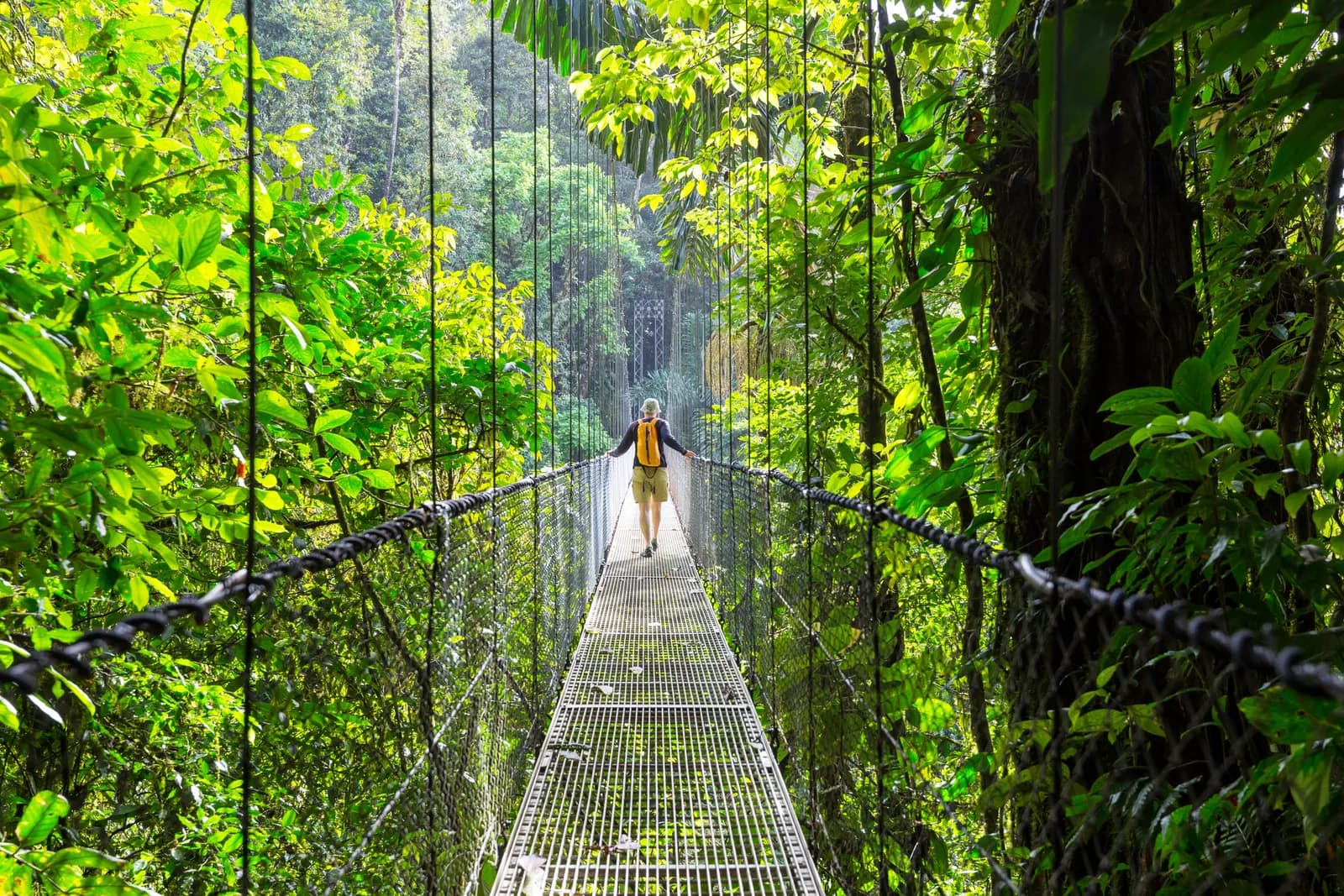
In a single week you can be in the humid heat of the Pacific coast, the misty cool of the Monteverde cloud forest at 16 to 22 °C, and the warm rain of the Caribbean. Rain is possible in any month, and the sun is strong all year. The trick is layers, quick-dry fabrics and good protection from rain, sun and insects, not a big suitcase.
Pack light for another reason too: domestic flights and the boats to places like Tortuguero have strict luggage limits, and many hotels have stairs and no porters.
Clothing
- Quick-dry T-shirts and shirts: cotton stays wet for days in the humidity.
- Lightweight long trousers: for hikes, mosquitoes and cool evenings.
- Shorts and summer clothes for the coast.
- A warm layer: a fleece or light sweater for Monteverde, early mornings and air-conditioned vans.
- Two swimsuits: one is always drying.
- A hat or cap and sunglasses.
- Something slightly nicer for a dinner out; dress codes are relaxed almost everywhere.
Shoes
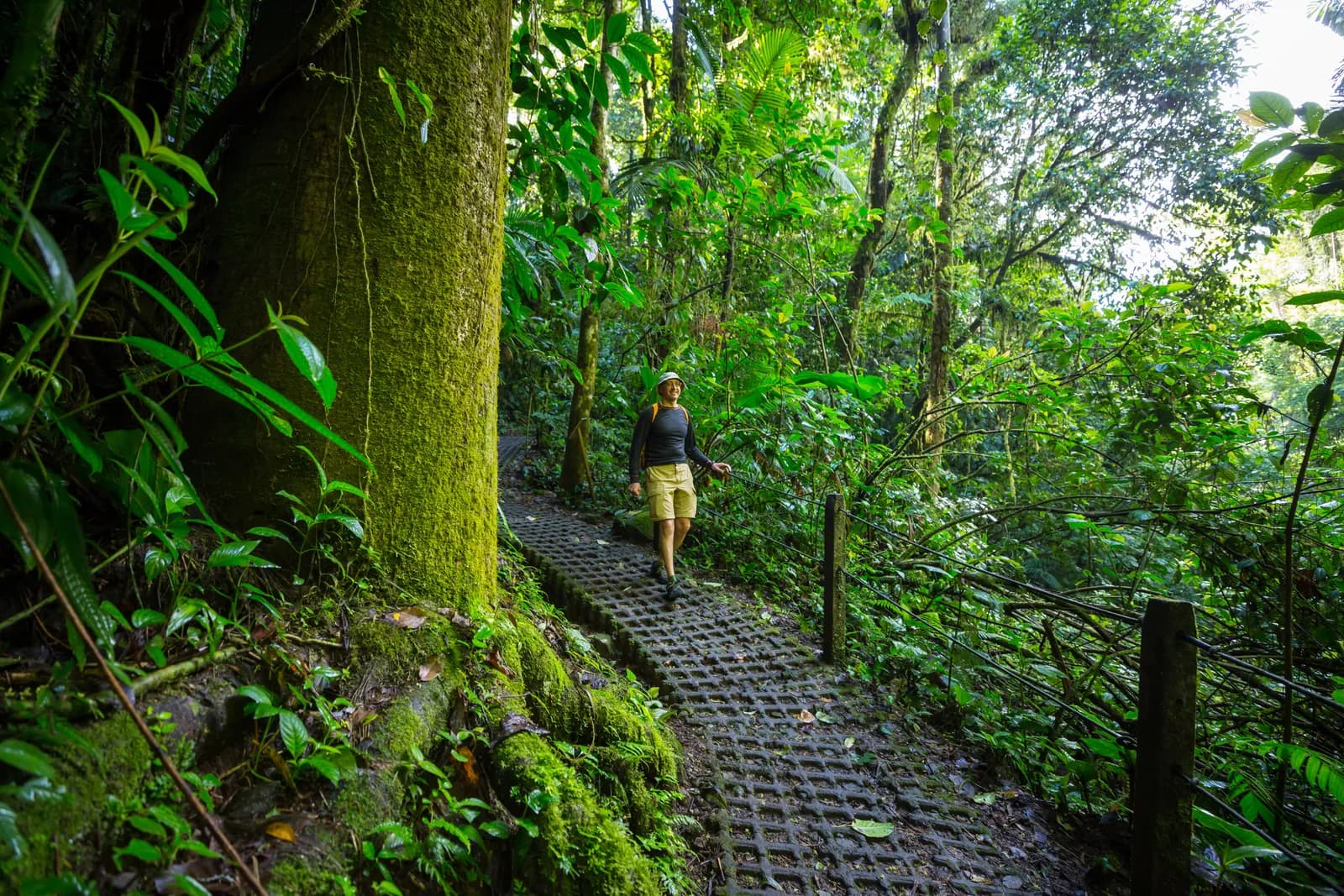
- Closed hiking shoes with good grip: trails are often muddy and slippery. They do not need to be heavy boots.
- Sandals or water shoes for beaches, rivers, hot springs and waterfalls.
- Tip: in very muddy places such as Tortuguero, rubber boots can usually be rented locally.
Rain Gear
- A real lightweight waterproof jacket is the most important item on this list. An umbrella is useless on a trail.
- A poncho to cover you and your backpack in the green season.
- A dry bag or zip-lock bags for your phone, passport and camera on boats, waterfalls and downpours.
In the green season, from May to November, the rain usually arrives in the afternoon. Our month-by-month guide explains what to expect each month.
Sun and Insect Protection
- High-SPF sunscreen: the tropical sun burns quickly, even on cloudy days. Mineral sunscreens are kinder to coral reefs.
- Insect repellent: especially for dawn and dusk in the lowlands and on the Caribbean coast.
- After-sun lotion and lip balm with sun protection.
Gear and Electronics
- Plugs: Costa Rica uses Type A and B plugs at 120 V, the same as the United States and Canada. Travelers from Europe and other regions need an adapter, and should check that their chargers accept 120 V.
- Power bank: useful on long tour days.
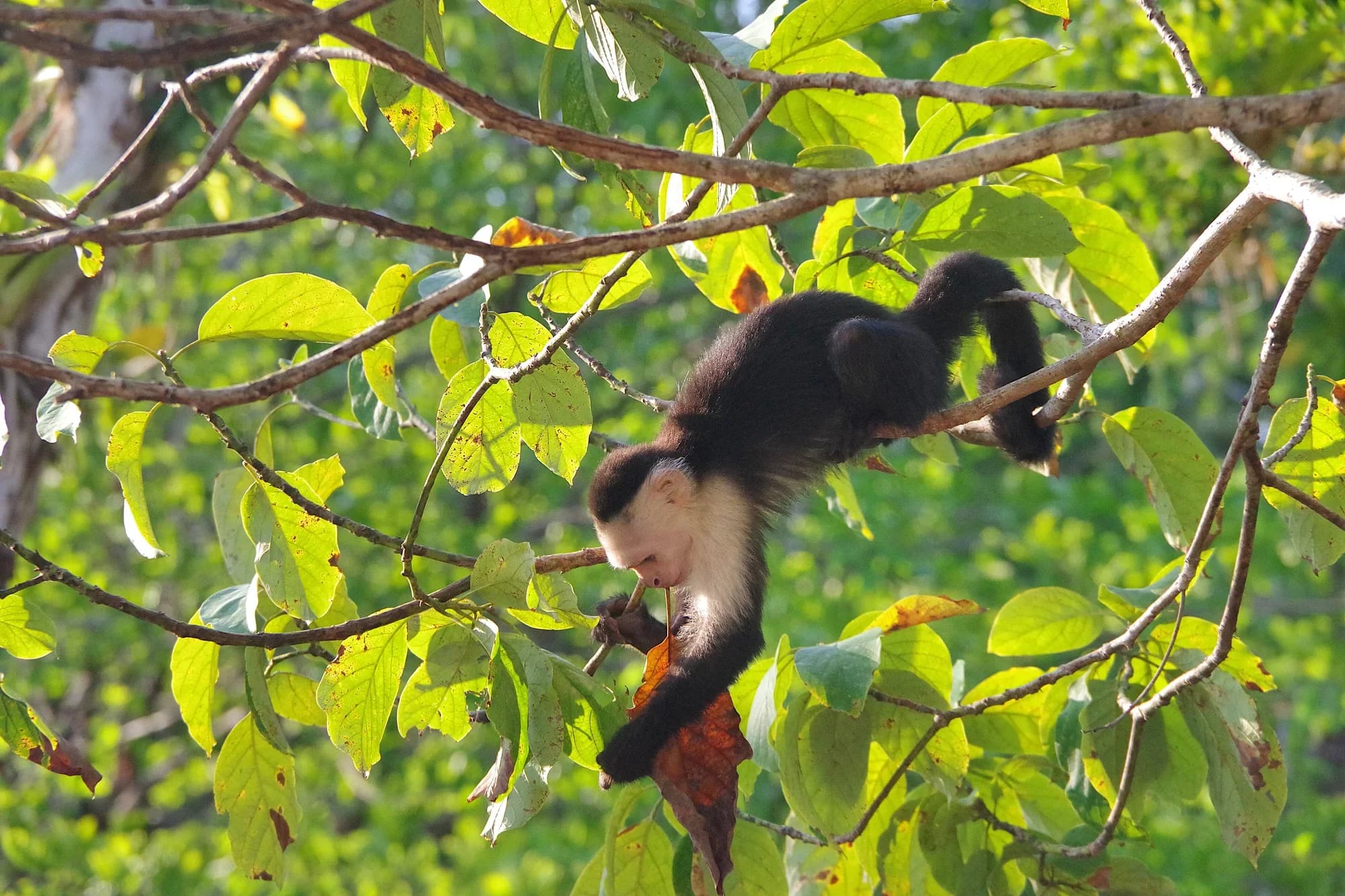
- Binoculars: they make a huge difference for birds and monkeys high in the trees.
- A small flashlight or headlamp for night walks and rural areas with little lighting.
- A reusable water bottle: the tap water is safe to drink in most of the country.
- A small daypack for tours.
Documents, Money and Health
- Passport valid for your whole stay, and proof of onward travel.
- Travel insurance with medical coverage: private hospitals usually ask for payment up front.
- Cards and some cash: cards are accepted almost everywhere, but carry about $100 in small bills for tips, parking and rural stops.
- Prescription medicines in their original packaging, plus a basic kit: motion-sickness tablets for winding roads, stomach remedies, plasters and antihistamines.
- Copies of your documents in your email or phone.
Packing by Region and Season
| Region | Climate | Extra items |
|---|---|---|
| Monteverde and the mountains | Cool, windy and misty | Fleece, long trousers, rain jacket |
| La Fortuna and Arenal | Warm and humid, frequent showers | Rain jacket, swimsuit for the hot springs |
| Pacific coast and Guanacaste | Hot; Guanacaste is the driest region | Sun protection, light clothes, sandals |
| Caribbean and Tortuguero | Humid, rain possible all year | Repellent, poncho, quick-dry clothes |
Our Monteverde guide explains why the cloud forest needs warmer clothes than the rest of the trip.
What to Leave at Home
- Jeans: heavy, hot and they never dry.
- Heavy hiking boots: light trail shoes are enough for almost every trail.
- Too many shoes and outfits: laundry service is easy to find.
- Valuables and expensive jewelry: they attract attention and add risk.
- A big suitcase, if your route includes domestic flights or boats.
If you are traveling with children, our guide Costa Rica with Kids adds the family-specific items. And to plan how you will move between regions with your luggage, see How to Get Around Costa Rica.
Frequently Asked Questions
What should I wear in Costa Rica?
Light, quick-dry clothes in layers: T-shirts, shorts and lightweight long trousers, plus a warm layer for the mountains and a waterproof jacket. Dress codes are relaxed almost everywhere.
Do I need a power adapter for Costa Rica?
Not if you come from the United States or Canada: Costa Rica uses Type A and B plugs at 120 V. Travelers from Europe and other regions need an adapter and should check that their devices accept 120 V.
Do I need hiking boots in Costa Rica?
No. Closed trail shoes with good grip are enough for almost every trail. Heavy boots are hot and slow to dry.
Should I bring a rain jacket in the dry season?
Yes. Rain is possible in any month, especially in the cloud forest, Arenal and the Caribbean. A lightweight waterproof jacket takes up little space.
What kind of sunscreen should I bring?
A high-SPF sunscreen, reapplied often. Mineral sunscreens are kinder to coral reefs. Sunscreen is more expensive in tourist areas, so it is worth bringing your own.
Do I need warm clothes in Costa Rica?
Yes, a light warm layer. Monteverde and the mountains are cool, with temperatures around 16 to 22 °C, and evenings and early mornings can feel cold.
Is there a luggage limit on domestic flights?
Yes. Small domestic airlines and the boats to remote places have strict luggage limits, so pack light and check the allowance before you travel.
Should I bring cash to Costa Rica?
Some. Cards are accepted almost everywhere, but carry about $100 in small bills for tips, parking and rural stops. Change for a $100 bill can be hard to find.
Final Thoughts
The best Costa Rica suitcase is a small one: quick-dry clothes, a real rain jacket, good shoes, sun and insect protection and a warm layer for the mountains. Everything else you can buy, borrow or do without. Travel light, and you will move between volcanoes, cloud forest and beaches without thinking about your luggage.
Ready to plan your Costa Rica trip? ISA Travel organizes private transfers with room for your luggage, day tours and multi-day itineraries across the country. → See routes and prices
A local team that has been planning and running trips across Costa Rica since 2014.