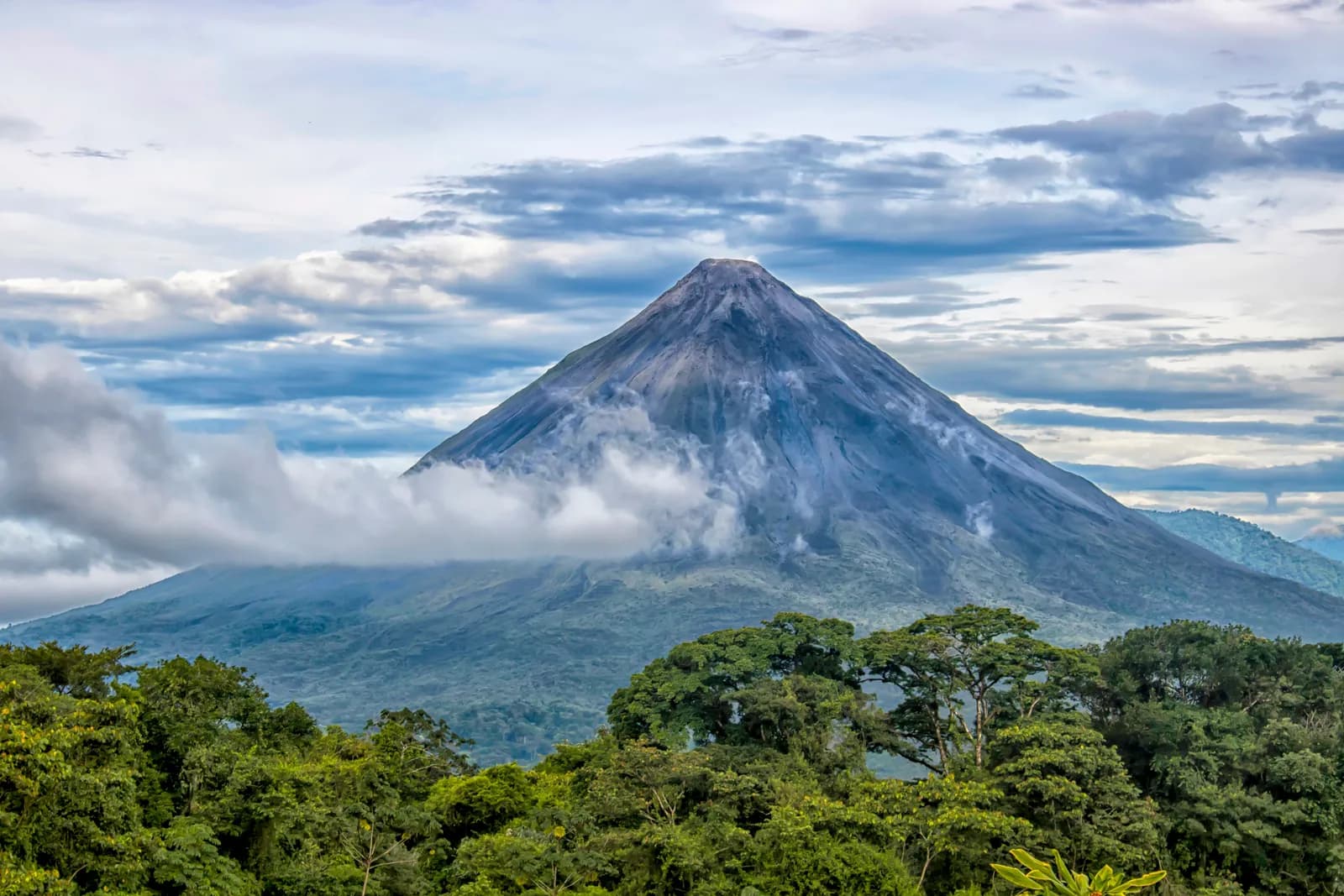
If Costa Rica had to be summed up in a single town, it would be La Fortuna. Picture a small farming community where a near-perfect volcanic cone rises above the church steeple, where the rivers run warm because a volcano heats them underground, and where you can rappel down a waterfall in the morning and soak in thermal springs by sunset.
La Fortuna, Costa Rica sits at the base of Arenal Volcano in the country's northern lowlands, and it has quietly become the adventure capital of Central America, without losing its small-town soul. We're a Costa Rica–based travel team, and this is the destination we plan more often than any other, so consider this guide the same advice we give our own clients.
Below you'll find everything you need to plan your trip: how to get there, when to go, the best things to do (with honest difficulty ratings), where to stay and eat, the mistakes first-timers make, and answers to the questions travelers ask us most.
Table of Contents
- Why Visit La Fortuna?
- Where Is La Fortuna?
- How to Get to La Fortuna
- Best Time to Visit La Fortuna
- Top Things to Do in La Fortuna
- How Many Days Should You Stay?
- Where to Stay in La Fortuna
- Best Restaurants in La Fortuna
- Transportation Tips
- Common Mistakes Travelers Make
- Frequently Asked Questions
- Final Thoughts
Why Visit La Fortuna?
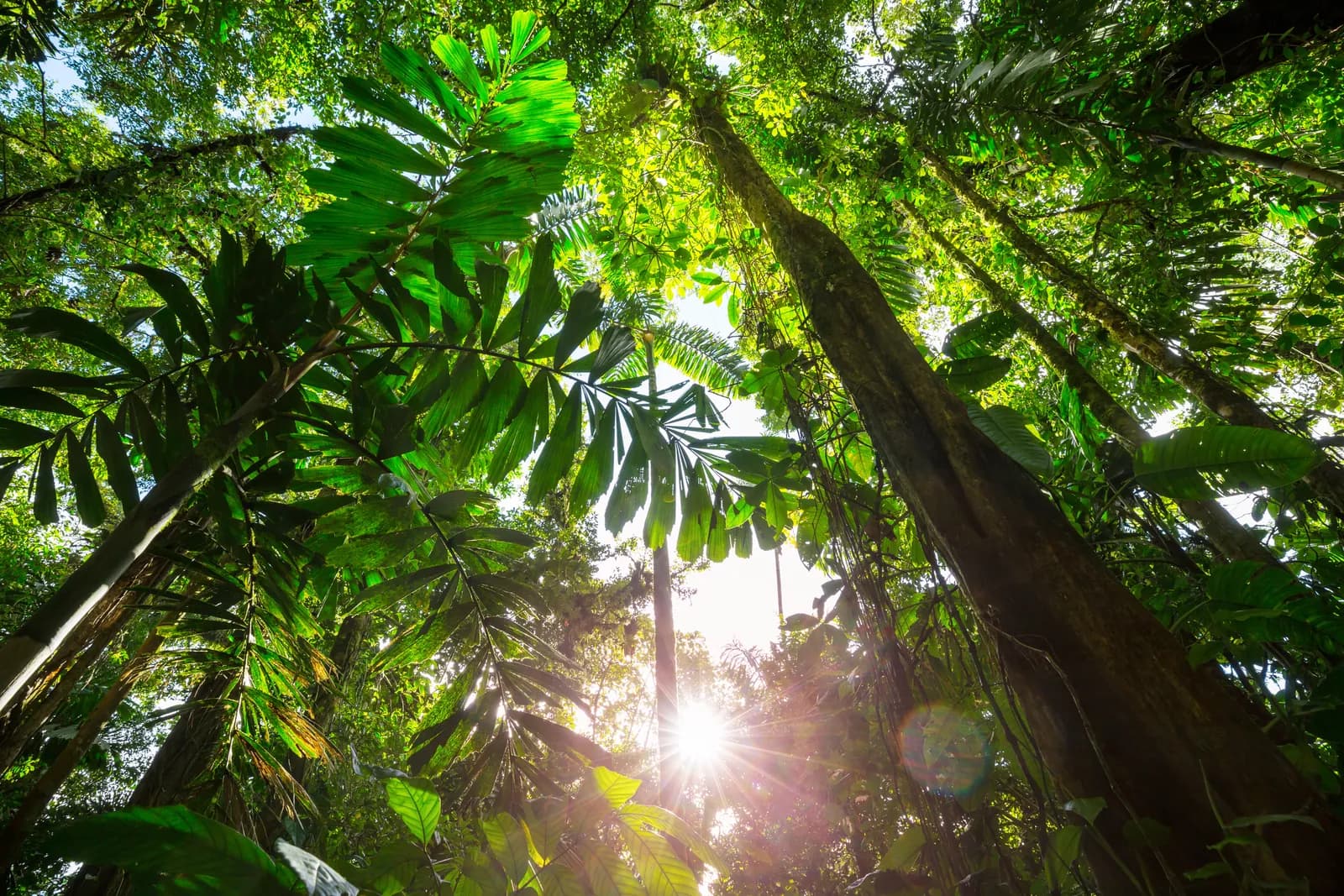
No other destination in Costa Rica concentrates so much within a 20-minute radius. From the central park you can see Arenal Volcano's textbook cone. Ten minutes away, a 70-meter waterfall pours into a jade-colored pool. In every direction there's rainforest laced with hanging bridges, rivers for rafting and wildlife floats, and more than a dozen hot springs fed by the volcano's geothermal heat.
What makes it special, though, is that La Fortuna is still a real town. This is dairy and cattle country in the canton of San Carlos, and locals fill the same sodas (family-run eateries) and Sunday markets that travelers wander through. You get world-class tourism infrastructure (bilingual guides, excellent roads, reliable operators) layered over an authentic agricultural community.
It's also the logistical heart of most Costa Rica itineraries, pairing naturally with Monteverde's cloud forest, the Guanacaste beaches, or the Caribbean coast.
Where Is La Fortuna?
La Fortuna sits in Costa Rica's northern lowlands, in the province of Alajuela, at roughly 250 meters (820 feet) above sea level, which means warm, humid weather year-round. The town spreads across flat farmland at the eastern base of Arenal Volcano, with Lake Arenal just beyond the volcano to the west.
Approximate distances and real-world drive times (Costa Rican roads are slower than the mileage suggests):
- From San José / SJO airport: ~165 km (103 miles), 3–3.5 hours
- From Liberia / LIR airport: ~135 km (85 miles), 2.5–3 hours
- From Monteverde: ~115 km (70 miles) around Lake Arenal, 3–3.5 hours by car, or about 3 hours via the popular jeep-boat-jeep transfer across the lake
- From Tamarindo: ~230 km (145 miles), 4–4.5 hours
A useful rule for all of Costa Rica: trust drive-time estimates from locals over straight-line distances. Mountain curves, rain, and the occasional herd of cattle are part of the journey.
How to Get to La Fortuna
Rental car. The most flexible option and our recommendation for most travelers. From San José, the two main routes are via San Ramón (Route 702, curvier but scenic) or via Zarcero and Ciudad Quesada (Route 141, with a stop at Zarcero's famous topiary garden). Roads are paved the whole way and a 4x4 isn't required. Downsides: mountain fog, afternoon rain, and the general stress of driving in a new country.
Shared shuttle. Door-to-door vans run daily from San José, SJO, Liberia, Monteverde, and the beaches for roughly $60–70 per person. Comfortable and easy, but you're tied to fixed departure times and other passengers' hotel stops.
Private transfer. A private driver leaves on your schedule and can stop wherever you like: a viewpoint, a fruit stand, lunch at a local soda. Our own San José–La Fortuna transfer is $250 per vehicle, which covers 1 to 4 passengers, with a flat $10 for each additional traveler from the fifth onward. For families and small groups, the per-person math often beats the shuttle.
Traveling with luggage, kids, or a tight schedule? ISA Travel arranges private, air-conditioned transfers with bilingual local drivers anywhere in Costa Rica. → Book private transportation to La Fortuna
Public bus. The budget champion: direct buses leave from San José's Terminal 7-10 several times daily, take about 4–4.5 hours, and cost around $5–6. Keep your daypack on your lap and enjoy the ride.
Domestic flight. Sansa flies from San José to La Fortuna's small airstrip (FON) in about 25–30 minutes. It's the fastest option and the views are spectacular, but flights are weather-dependent and you'll still need a 15-minute taxi into town.
Best Time to Visit La Fortuna
The honest answer: there is no bad time, only different trade-offs.
Dry season (mid-December through April). The most sunshine, the best odds of seeing Arenal's summit cloud-free, and the easiest conditions for adventure tours. It's also high season: hotels and popular hot springs sell out weeks ahead, and prices peak around Christmas, New Year's, and Easter week (Semana Santa, when Costa Rican families travel too).
Green season (May through November). Mornings are typically bright, with rain arriving in the afternoon. Everything turns impossibly lush, waterfalls run at full power, rafting rivers get more exciting, and rates drop noticeably. This is when we send travelers who want the region at its greenest without the crowds.
A local microclimate secret: La Fortuna sits on the Caribbean-influenced side of the mountains, so its rain pattern differs from the Pacific coast. September and October, the soggiest months in Guanacaste, are often gentler here, with pleasant mornings and thin crowds.
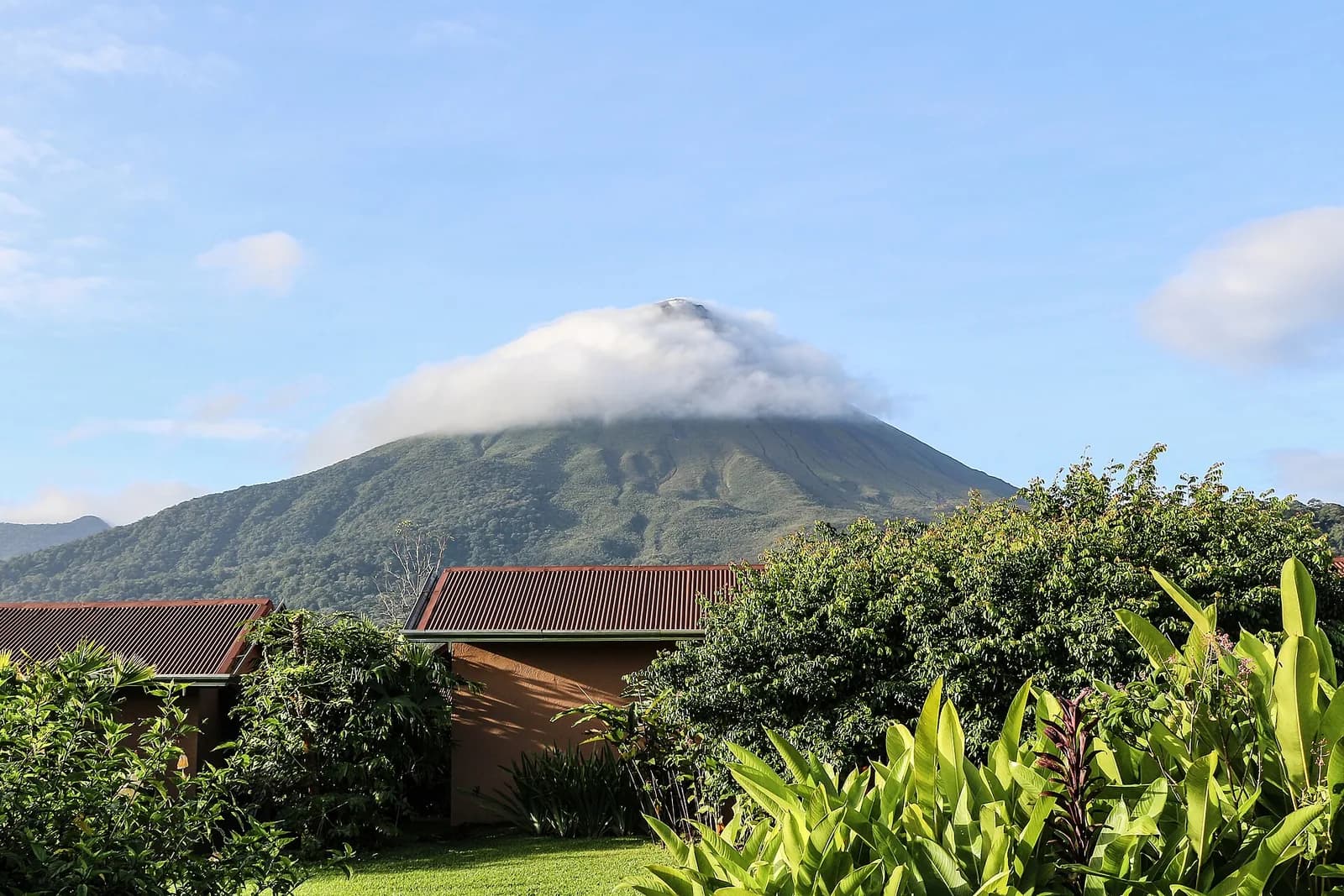
For volcano views, be outside early: the summit is usually clearest between sunrise and mid-morning before it builds its own cloud cap. Check the national weather service (IMN) forecast a day or two ahead, and build flexibility into your plans. Arenal reveals itself on its own schedule.
Top Things to Do in La Fortuna
This is where La Fortuna earns its reputation. The most popular La Fortuna tours combine two or three of the experiences below into a single day, but each one also works on its own. Here's what to expect, how long each takes, and the local tips that make the difference.
Arenal Volcano National Park
The park protects the 1,633-meter (5,358-foot) volcano and the lava fields left by its 1968 and 1992 eruptions. Trails cross hardened lava rivers, pass a ceiba tree over 400 years old, and end at viewpoints where the cone fills the sky. One honest expectation-setter: Arenal has been in a resting phase since October 2010, so there's no glowing lava. The reward is the landscape, the wildlife, and the story. Your ticket ($15 + tax adults, $5 + tax children, credit card only) covers both park sectors on the same day: the main Volcano Sector and the quieter Peninsula Sector on Lake Arenal. Hours and fees are published by SINAC, the national parks authority.
- Duration: 2–3 hours · Difficulty: easy to moderate
- Best time: right at the 8 a.m. opening, when the summit is clearest and wildlife is most active (last entry to the Volcano Sector is around 2:30 p.m.)
- Local tip: a naturalist guide will spot sloths, vipers, and toucans you'd walk straight past. And skip any mention of climbing Cerro Chato: that trail has been officially closed since 2017.
La Fortuna Waterfall
The region's icon: the Fortuna River leaps about 70 meters (230 feet) off a jungle cliff into a jade pool. Reaching the base means descending roughly 530 well-built steps, easy going down and a workout coming back up. The site is run by ADIFORT, a local community association, so your $18 entrance fee ($5 for kids) funds neighborhood projects and conservation. Facilities are excellent: changing rooms, lockers, an orchid garden, and free parking. Swimming is allowed in the calmer pool beside the main falls, with lifeguards on duty. The water directly under the cascade is too powerful.
- Duration: 1.5–2 hours · Difficulty: moderate (it's all about the stairs)
- Best time: before 8:30 a.m. or after 3 p.m. to dodge tour buses; dry season brings the clearest water
- Local tip: wear water shoes (the riverbed is rocky) and photograph the falls from the upper viewpoint before you commit to the descent.
Mistico Park Hanging Bridges
Mistico Arenal Hanging Bridges Park strings 16 bridges (six of them suspended, the longest stretching nearly 100 meters) along a 3-kilometer loop through primary rainforest. Walking at canopy level completely changes what you see: toucans, howler monkeys, orchids, and, if you're lucky, an eyelash pit viper coiled at eye height. Trails are wide and well-graded, making this one of the most accessible rainforest experiences in Costa Rica. Self-guided entry runs around $30; guided birding and night walks cost more and are worth it.
- Duration: 2–2.5 hours · Difficulty: easy
- Best time: early morning for birds, or after 2 p.m. when groups thin out
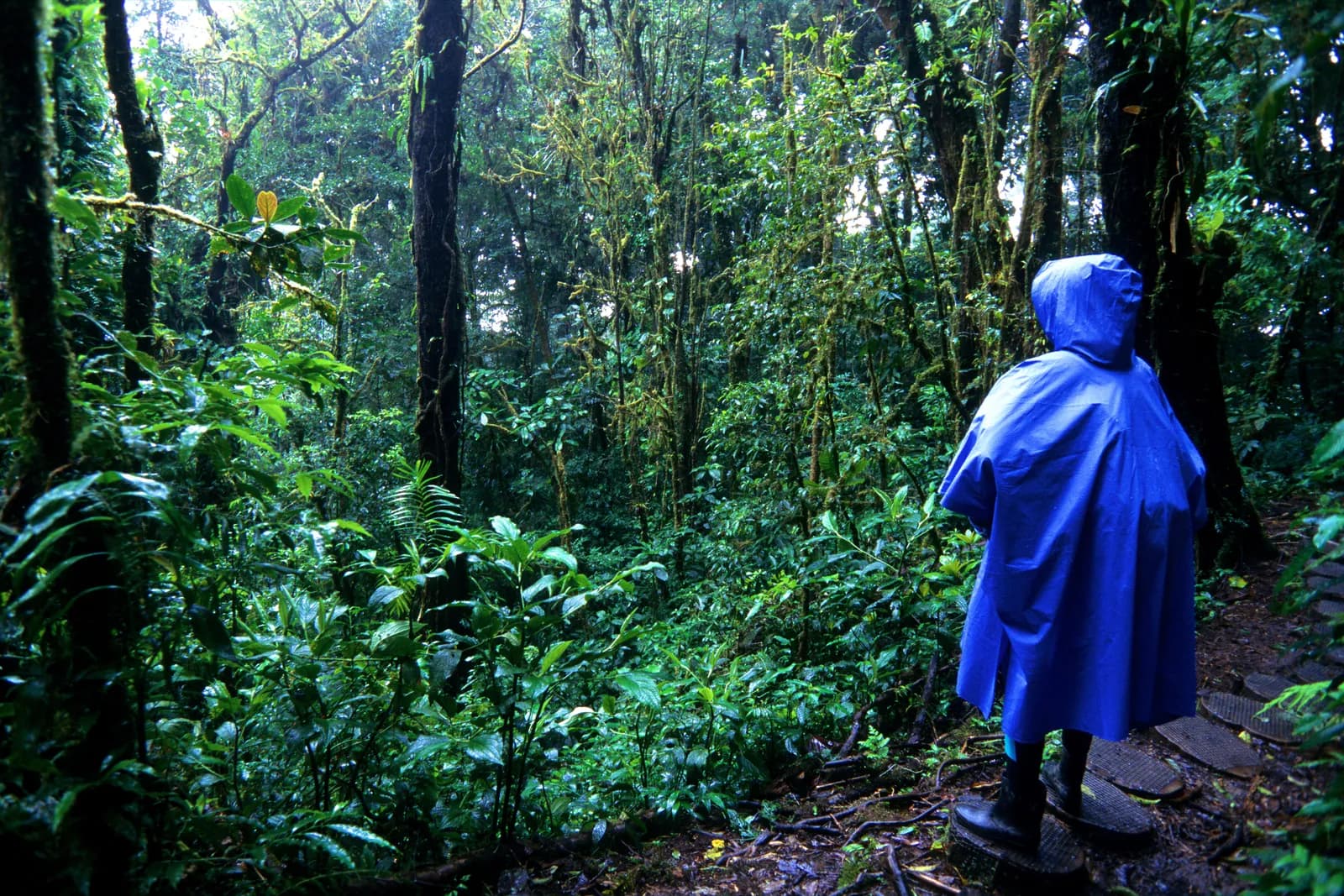
- Local tip: light rain is a gift here; the forest comes alive and the crowds vanish. Bring a poncho instead of canceling.
Hot Springs
Arenal sits above a vast geothermal aquifer, which is why the best hot springs in Costa Rica are concentrated along a few kilometers of road west of town. There are more than a dozen properties, and choosing well matters:
| Property | Best for | Approx. adult day pass |
|---|---|---|
| Tabacón | Luxury; the only true free-flowing thermal river | $90–110+ |
| The Springs Resort | Dramatic volcano views, huge multi-level pools | $75–90 |
| Baldi | Families: 25 pools, waterslides, swim-up bars | $50–85 |
| EcoTermales | Quiet, intimate soaks (visitor numbers are capped) | $50–65 |
| Paradise Hot Springs | Best mid-range value, hydrotherapy pools | $40–50 |
| Los Laureles / Termalitas | Local vibe on a budget | $12–20 |
Prices shift seasonally and often include meal bundles, so confirm on official sites. There's also a free option: El Chollín, the public stretch of warm river near Tabacón. No facilities, so bring nothing you'd mind losing.
- Duration: 2–3 hours · Difficulty: none, and that's the point
- Best time: evening, after a day of adventures, ideally with the volcano silhouetted above you
- Local tip: in high season, Tabacón and EcoTermales sell out well in advance. Book before you land.
Ziplining Above the Canopy
La Fortuna's zipline parks are among the country's best. Sky Adventures runs an open-air gondola to the top of the ridge, then sends you down a series of long, fast cables with views over Lake Arenal and the volcano; Ecoglide offers a friendlier circuit plus a Tarzan swing that produces the best screams in town. Expect thorough safety briefings, double-clipped harnesses, and guides who genuinely love their job.
- Duration: 2.5–3 hours · Difficulty: easy physically, thrilling mentally (age and weight limits vary by operator)
- Best time: morning, before afternoon wind and rain move in
- Local tip: closed shoes are mandatory, and secure your glasses. The lake-view lines are the fastest.
White-Water Rafting
Two classic rivers run from La Fortuna. The Balsa (class II–III) is the friendly one: splashy, warm, and suitable for beginners and kids roughly age 8 and up. The Sarapiquí (class III–IV) delivers proper adrenaline with bigger drops and technical rapids. Half-day trips include transport, safety briefing, and a riverside fruit snack that somehow tastes better than any fruit you've had before.
- Duration: 4–5 hours door-to-door · Difficulty: moderate; no experience needed on the Balsa
- Best time: green season (May–November) means higher water and punchier rapids; the rivers run year-round
- Local tip: book with licensed operators that run a safety kayaker alongside the rafts. The good ones all do.
Safari Float on the Peñas Blancas River
The rafting trip for people who don't want rapids. A guide paddles while you drift a calm river scanning the banks for howler monkeys, two-toed sloths, caimans, kingfishers, and iguanas sunbathing on branches. It's the single best wildlife-per-effort ratio in the region and works for every age, from toddlers to grandparents.
- Duration: 2–3 hours · Difficulty: none
- Best time: early morning or 3–4 p.m., when animals are active along the water
- Local tip: bring binoculars and keep your camera in a dry bag until the guide points something out, which they always do.
Sloth Spotting on the Bogarín Trail
A flat, 2-kilometer private trail on the edge of town that has become Costa Rica's most reliable place to see wild sloths: both two-toed and three-toed individuals live here year-round. Guides carry spotting scopes and will help you capture frame-filling photos through the lens with your phone. You'll likely also see agoutis, basilisk lizards, and a parade of birds.
- Duration: 1.5–2 hours · Difficulty: easy (the flattest walk in town)
- Best time: morning or late afternoon
- Local tip: go with the guide. Sloths are astonishingly good at looking like termite nests, and visitors who walk the trail alone routinely miss every single one.
Coffee, Chocolate & Sugarcane Tours
Here's a detail most blogs get wrong: the La Fortuna lowlands are cacao and sugarcane country (coffee prefers higher altitudes), so the best farm tours here combine all three. You'll ferment and grind cacao into chocolate, press sugarcane juice in a traditional trapiche, and taste coffee grown on nearby slopes, usually with a farmer whose family has worked the land for generations. Operations like Don Juan and North Fields Café make it hands-on rather than a walk-and-lecture.
- Duration: 2–3 hours · Difficulty: easy
- Best time: any time; this is the perfect rainy-afternoon plan
- Local tip: buy your beans and chocolate directly from the farm; it's better and cheaper than the souvenir shops.
Horseback Riding
San Carlos is working-ranch territory, and riding here connects you to the sabanero (Costa Rican cowboy) culture that predates tourism. Typical rides cross green pastures with the volcano as a backdrop or head toward the hills above the La Fortuna Waterfall. Horses are accustomed to beginners, and outfitters match mounts to experience levels.
- Duration: 2–3 hours · Difficulty: easy; first-timers welcome
- Best time: morning, before the midday heat
- Local tip: wear long pants, confirm helmets are provided, and choose established stables with visibly well-kept horses.
Lake Arenal
Costa Rica's largest lake (about 85 square kilometers) was created in 1979 when a hydroelectric dam flooded the valley, and the original town of Arenal now rests beneath the surface. Today the lake anchors the country's renewable energy grid and offers sunset boat tours, kayaking, stand-up paddling, and world-class sportfishing for guapote (rainbow bass). The western end near Tilarán catches steady winds from December to April, making it a windsurfing and kite spot.
- Duration: 2 hours to a half day · Difficulty: easy
- Best time: late afternoon, when the light turns golden and the water glasses off
- Local tip: the national park's Peninsula Sector has short trails and a lakeside viewpoint that most visitors never discover.
Canyoning (Waterfall Rappelling)
The region's signature adrenaline rush: rappelling down a series of jungle waterfalls (the tallest nearly 200 feet) inside a narrow rainforest canyon, connected by scrambles, slides, and guided downclimbs. Guides control your rope the entire way, so courage matters more than technique. You will be completely, gloriously soaked.
- Duration: 4–4.5 hours door-to-door · Difficulty: moderate; good fitness helps, experience doesn't matter
- Best time: morning departures, year-round
- Local tip: bring a full change of clothes and ask about age and weight requirements when booking; they vary by canyon.
Day Trip: Río Celeste & Tenorio Volcano National Park
About 1.5 hours from La Fortuna flows the most improbably colored river in Central America. Río Celeste turns a milky sky-blue where two clear streams meet: a light-scattering effect caused by suspended minerals, not dye or legend (though the legend, that God rinsed his paintbrushes here after coloring the sky, is better). The 6-kilometer round-trip trail in Tenorio Volcano National Park visits the waterfall, a turquoise lagoon, and bubbling volcanic vents. If you'd rather not drive it yourself, we run this as a guided Río Celeste day tour.
- Duration: full day from La Fortuna · Difficulty: moderate; steep stairs to the waterfall and real mud in the wet months
- Best time: dry season for the bluest water; heavy rain temporarily turns the river ordinary
- Local tip: start early, rent rubber boots at the entrance if it's been raining, and know that swimming inside the park is prohibited.
Want these woven into one seamless plan, with entrances, guides, and transport handled? ISA Travel builds private, custom La Fortuna itineraries around your pace and interests. → Request a private tour
How Many Days Should You Stay in La Fortuna?
Our standard recommendation is three nights (enough to experience the essentials without sprinting). Here's how different trip lengths play out:
2 days. Doable if you prioritize. Day 1: Arenal Volcano National Park in the morning, hot springs in the evening. Day 2: La Fortuna Waterfall early, then one adrenaline pick (ziplining, rafting, or canyoning) after lunch.
3 days (the sweet spot). Add a morning at Mistico's hanging bridges, an afternoon safari float or Bogarín sloth walk, and a second, different hot springs. Comparing them is half the fun.
5 days. Now you can breathe. Layer in the Río Celeste day trip, a chocolate-and-sugarcane farm tour, sportfishing or kayaking on Lake Arenal, and one blissfully unscheduled pool day. Wildlife lovers can add the Caño Negro wetlands near the Nicaraguan border.
Whatever your length, resist stacking more than two structured activities per day. This region rewards slow afternoons.
Not sure how La Fortuna fits your route? Tell us your dates and travel style, and we'll map the whole country around them. → Plan your Costa Rica trip
Where to Stay in La Fortuna
Where you sleep shapes your trip here, because accommodations cluster in three distinct zones.
La Fortuna town center puts restaurants, tour offices, and the bus terminal at your doorstep. It's ideal if you're not renting a car, since every tour picks up in town. The trade-off: few volcano views. The volcano corridor, the road running west toward the national park, is where the view lodges and hot-springs resorts line up; you'll want wheels or taxis. El Castillo and the lake's south shore offer seclusion and birdsong for travelers escaping crowds entirely.
Luxury. Tabacón Thermal Resort & Spa gives guests private access to its legendary thermal river. The Springs Resort & Spa pairs enormous multi-level hot springs with postcard volcano views. Nayara's trio of properties, including tented suites with private plunge springs, is the honeymoon pick. Best for: couples, special occasions, and anyone who wants hot springs steps from bed.
Mid-range. Arenal Observatory Lodge began life as a volcano research station and remains the closest lodge to the cone, with trails and superb birding on-site. Hotel Silencio del Campo and Volcano Lodge & Springs both offer private thermal pools at friendlier prices. Best for: families and couples who want views and springs without the splurge.
Budget. In-town options like Arenal Backpackers Resort (with a pool and social scene) and the family-run cabinas around the church keep beds affordable, with sodas and supermarkets a short walk away. Best for: backpackers and travelers maximizing their tour budget.
Book two to three months ahead for dry-season dates: the best properties genuinely fill.
Best Restaurants in La Fortuna
For a town of about 15,000 people, La Fortuna eats remarkably well. These are real, currently operating spots we send travelers to:
Don Rufino is the town's special-occasion institution, right on the main corner. Order the tenderloin and a proper cocktail. SelvaRustica delivers a jungle-chic dinner with warm lighting and a more refined kitchen, great for date night.
For authentic Costa Rican food, go where locals go: Soda La Hormiga, Soda & Restaurante Rodríguez, and Soda Mima all serve generous casados (the national plate of rice, beans, salad, plantains, and your choice of protein) for roughly ₡4,000–5,500 ($8–11). La Parada, facing the bus terminal, is the reliable long-hours option.
Craving variety? Chifa La Familia Feliz serves a genuinely good Peruvian-Chinese fusion you won't expect to find here, and Jalapas blends Costa Rican and Mexican flavors in a relaxed setting. Organico Fortuna covers vegetarians and vegans with fresh bowls and green juices. For breakfast and serious coffee, locals point you to Rainforest Café and Red Frog Coffee Roaster.
Two local dining notes: sit-down restaurants add 13% tax plus a legally standard 10% service charge to the bill, so extra tipping is optional. And in high season, reserve Don Rufino a day or two ahead. The corner tables go fast.
Transportation Tips
Getting around town. Central La Fortuna is compact and walkable, and tour operators include hotel pickup, so many visitors never need their own vehicle.
Taxis and ride apps. Official red taxis wait around the central park and use a meter locals call the "maría." A ride to the waterfall runs about $10–15. Ride-hailing apps have limited, unreliable coverage here; taxis are the dependable choice.
Driving. All main roads around La Fortuna are paved, and no 4x4 is needed for the town, park, waterfall, or hot springs. Route 142 around Lake Arenal is gorgeous but relentlessly curvy and often foggy, so do it in daylight and watch for coatis crossing.
Renting a car. Costa Rican law requires basic liability insurance on every rental, which is why the final price jumps above the teaser rate. Budget for it. Photograph the vehicle at pickup, and fill the tank in town before longer drives.
Parking. Attractions have their own lots (sometimes a small fee). In town, use the small guarded lots near the church. The one real crime risk for tourists nationwide is theft from parked cars, so never leave anything visible inside, not even a jacket.
Safety overall. La Fortuna is one of Costa Rica's safest tourist towns, tap water is drinkable, and 911 works countrywide with English-speaking operators. The U.S. Embassy in Costa Rica keeps current traveler information if you want an official source.
Common Mistakes Travelers Make
Expecting flowing lava. Arenal stopped erupting in October 2010, and OVSICORI, the national volcano observatory, still classifies it as active but resting. It's a magnificent, steaming volcano. Just set expectations before you scan the slopes at night.
Trusting map-app drive times. Add 25–50% to whatever your phone says, especially in rain. Arriving relaxed beats arriving on schedule.
Overstuffing the itinerary. Three tours in one day sounds efficient and feels like punishment in tropical humidity. Two is the ceiling; one plus a hot spring is the local rhythm.
Skipping the guide to save money. On wildlife walks, a trained guide is the difference between seeing eight animals and seeing leaves. Spend here first.
Visiting headline sights at midday. The waterfall and hanging bridges belong to tour buses from about 9 a.m. to 2 p.m. Go early or late.
Booking hot springs on arrival. In dry season, Tabacón and EcoTermales sell out days or weeks ahead. Reserve before your trip.
Attempting Cerro Chato. The crater-lake hike has been closed since 2017. Operators still whispering about it are not operators you want.
Carrying only large US bills. Dollars are accepted almost everywhere, but sodas, taxis, and tips work better with small bills or colones. Change for a $100 is a genuine problem.
Writing off the green season. May through November brings full waterfalls, lively rivers, lower prices, and afternoon rain you can plan around. Many of our favorite trips happen then.
Frequently Asked Questions
Is La Fortuna worth visiting?
Absolutely. It's arguably Costa Rica's most complete destination, combining a volcano, waterfall, rainforest, wildlife, hot springs, and top-tier adventure tours within a 20-minute radius of one walkable town.
How many days do you need in La Fortuna?
Three nights is the sweet spot: enough for the volcano, waterfall, hanging bridges, one adventure activity, and unhurried evenings in the hot springs. Two days works if you prioritize ruthlessly; five lets you add Río Celeste.
Is Arenal Volcano still active? Can you see lava?
Arenal is an active volcano in a resting phase: it has not produced visible lava since October 2010. You can hike its old lava fields, but nighttime "lava viewing" no longer exists.
Can you swim at La Fortuna Waterfall?
Yes, in the designated pool beside the main falls, where lifeguards are on duty. Swimming directly beneath the 70-meter cascade is prohibited because of the current's force.
Do you need a car in La Fortuna?
No. Every major tour includes hotel pickup, town is walkable, and taxis cover the gaps. A car adds flexibility for hot springs, viewpoints, and day trips like Río Celeste, or you can book private transport instead.
Is La Fortuna safe?
Yes. It's among the safest tourist towns in Costa Rica. The main precaution is the same as everywhere in the country: never leave belongings visible in a parked car.
What is the best month to visit La Fortuna?
February and March offer the driest, clearest conditions. For fewer crowds and lower prices with still-great weather, we like May, June, and the September–October window, which is milder here than on the Pacific coast.
Which hot springs are best?
Tabacón for luxury and its natural thermal river, The Springs for volcano views, Baldi for families and waterslides, EcoTermales for a quiet, intimate soak, and Paradise for mid-range value. Most travelers are happiest visiting two and comparing.
How far is La Fortuna from San José?
About 165 kilometers (103 miles): a 3 to 3.5-hour drive, a 4.5-hour public bus, or a 25–30-minute domestic flight with Sansa.
Is La Fortuna expensive?
It spans every budget. Realistic daily figures per person: backpackers manage on $50–80, mid-range travelers on $120–200 including a tour, and luxury stays with private springs run $400+. Eating at sodas and booking tours directly keeps costs down.
Final Thoughts
La Fortuna is the rare destination that delivers exactly what the photos promise, and then keeps adding to it: the hiss of a thermal river at night, a sloth materializing out of what you'd sworn was a clump of leaves, the volcano appearing suddenly, absurdly, at the end of an ordinary street.
Plan the framework (transport, lodging, the two or three experiences you'd regret missing) and leave room for the place to surprise you. And if you'd rather have locals handle the framework, that's precisely what we do.
Ready to see it for yourself? ISA Travel designs private, fully personalized Costa Rica trips: itinerary, transport, guides, and the small details in between. → Start planning your La Fortuna adventure
A local team that has been planning and running trips across Costa Rica since 2014.