How to Get Around Costa Rica: Transfers, Shuttles, Buses, Car Rental and Flights (2026)
Short answer: the easiest way to get around Costa Rica is by private transfer between destinations, combined with tours that include hotel pickup. Shared shuttles are the mid-price option, public buses are the cheapest but slowest, rental cars give the most freedom but add mandatory insurance and demanding mountain roads, and domestic flights save time on long routes. Whatever you choose, plan on distances being measured in hours, not kilometers: a 150 km trip usually takes three hours or more.
We are ISA Travel, a Costa Rican tour operator that has been driving travelers around the country since 2014. This guide compares every way of getting around, with real distances and travel times from the routes we drive every week, so you can choose the right option for your group and budget.
Table of Contents
- Transportation Options at a Glance
- Why Getting Around Costa Rica Takes Longer Than You Think
- Real Distances and Travel Times from San José
- Private Transfers
- Shared Shuttles
- Public Buses
- Renting a Car
- Domestic Flights
- Taxis, Rideshare Apps and Ferries
- Which Option Is Right for You?
- Frequently Asked Questions
- Final Thoughts
Transportation Options at a Glance
| Option | Best for | Cost | Comfort | Flexibility |
|---|---|---|---|---|
| Private transfer | Families, groups, first-time visitors | Medium to high, per vehicle | Highest | High: leaves when you do |
| Shared shuttle | Couples and solo travelers on popular routes | Medium, per person | Good | Fixed schedules |
| Public bus | Backpackers and tight budgets | Lowest | Basic | Fixed schedules, slow |
| Rental car | Confident drivers, long trips | Medium, plus insurance and fuel | Depends on the driver | Highest |
| Domestic flight | Remote regions and short trips | High, per person | Good | Fixed schedules, strict baggage limits |
Why Getting Around Costa Rica Takes Longer Than You Think
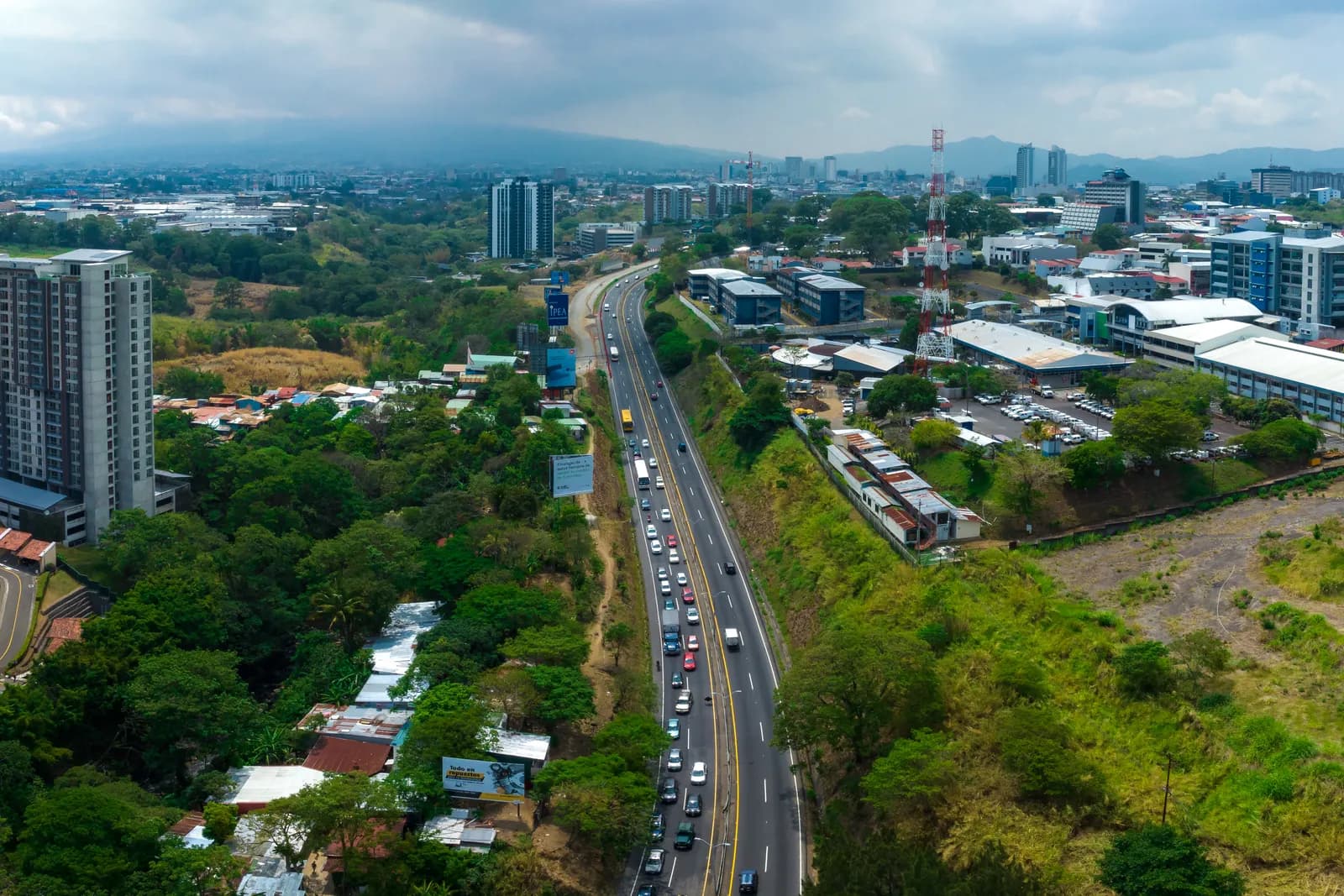
Costa Rica is small, but it is crossed by mountain ranges and volcanoes. Most roads have two lanes, many bridges have one, and trucks share the highways with tourists. Fog in the mountains in the afternoon and heavy rain in the green season slow everyone down.
Our rule of thumb when we plan itineraries is simple: add about 40% to whatever a map app tells you, and never plan more than one long drive per day. A trip that looks like two hours on a map is often three in real life.
Real Distances and Travel Times from San José
These are the distances and times we use for our private transfers, under normal conditions:
| Route | Distance | Approximate time |
|---|---|---|
| San José to SJO Airport | 23 km | 45 min |
| San José to Jacó | 100 km | 2 h |
| San José to Manuel Antonio | 167 km | 3 h |
| San José to Tortuguero (via La Pavona) | 100 km | 3 h, then a boat |
| San José to La Fortuna | 165 km | 3 h 30 min |
| San José to Monteverde | 152 km | 3 h 30 min |
| San José to Cahuita | 208 km | 4 h |
| San José to Río Celeste | 210 km | 4 h 30 min |
| San José to Liberia | 230 km | 4 h 30 min |
| San José to Playa Avellanas | 260 km | 5 h |
Private Transfers
A private transfer is a car or van with a professional driver that takes only your group, door to door, at the time you choose. It is the most comfortable way to travel between destinations, and the option most of our clients end up preferring.
- How it works: the driver picks you up at the airport or your hotel and drops you at your next hotel. You can stop for photos, lunch or a bathroom break whenever you want.
- Price: it is charged per vehicle, not per person. At ISA Travel each fare covers 1 to 4 passengers, with USD 10 per additional passenger from the fifth. That makes it surprisingly competitive for families and groups.
- Best for: first-time visitors, families with children, older travelers, anyone with a lot of luggage and anyone who would rather not drive mountain roads at night.
- Things to know: book ahead in high season, and check that the company is licensed by the Costa Rican Tourism Institute (ICT).
ISA Travel publishes fixed prices for private transfers from San José to 34 destinations, with a 20-minute wait included and free cancellation up to 48 hours before.
Shared Shuttles
Shared shuttles are tourist minivans that run fixed routes between the main destinations, such as San José, La Fortuna, Monteverde, Manuel Antonio and the Guanacaste beaches. You pay per seat and share the van with other travelers.
- Pros: cheaper than a private transfer for one or two people (typically $55 to $70 per person per leg), hotel pickup on most routes, air conditioning.
- Cons: fixed departure times, several hotel stops along the way, and limited luggage space.
- Best for: couples and solo travelers following the classic route.
Public Buses
Costa Rica has an extensive and very cheap public bus network that reaches almost every town. Most long-distance routes start from different terminals in San José, depending on the destination.
- Pros: the lowest price by far (San José to La Fortuna costs around $5 to $6), and a genuinely local experience.
- Cons: journeys are much slower (San José to La Fortuna takes about 4.5 hours by bus), connections can be complicated, schedules change and there is limited space for luggage.
- Safety tip: keep your bag with you, not in the overhead rack, and keep valuables out of sight.
Renting a Car
Renting a car gives you total freedom, and many confident drivers enjoy it. But it is more demanding, and more expensive, than most visitors expect.
- Mandatory insurance: Costa Rican law requires third-party liability insurance, which is sold by the rental company and is not covered by credit cards. On its own it typically adds about USD 10 to 25 per day, and with the coverage most companies require, a car advertised online at around $12 a day often ends up at $50 to $70 a day at the counter.
- 4x4: recommended for Monteverde, the Osa Peninsula, parts of the Nicoya Peninsula and any rural road in the green season.
- Navigation: Waze works well, but addresses are given by landmarks, not street numbers.
- Driving at night: avoid it. Roads are poorly lit, with pedestrians, animals and potholes.
- Theft: never leave anything inside a parked car, even for a few minutes. This is the most common crime affecting tourists.
Our honest opinion: for a trip of a week or less, a private transfer or shuttle usually costs about the same as a rental car with insurance and fuel, without the stress. Renting makes more sense for longer trips, remote areas or very flexible plans.
Domestic Flights
Small domestic airlines, such as Sansa, connect San José with regions like La Fortuna, Quepos (Manuel Antonio), Tamarindo, Drake Bay, Puerto Jiménez and Tortuguero. A flight to the La Fortuna area takes about 25 to 30 minutes, compared with three and a half hours by road.
- Pros: huge time savings on long routes, especially to the Osa Peninsula and Tortuguero.
- Cons: price per person, small planes, strict baggage weight limits (passengers are sometimes weighed with their carry-on) and cancellations due to weather.
- Tip: check the baggage allowance before you pack, and leave a margin before international connections.
Taxis, Rideshare Apps and Ferries
- Official taxis: red, with a yellow triangle on the door and a meter, called the maría. At the international airport, the official taxis are orange. Always ask the driver to use the meter or agree the fare before you go.
- Rideshare apps: they operate widely in the Central Valley and are popular with visitors, although their legal status has long been a gray area.
- Ferries: the Puntarenas to Paquera ferry crosses the Gulf of Nicoya and is the classic way to reach Montezuma, Santa Teresa and the southern Nicoya Peninsula. We also offer transfers to the Paquera ferry.
- Boats: some places, such as Tortuguero and Drake Bay, can only be reached by boat or small plane.
Which Option Is Right for You?
- First trip, one week, three destinations: private transfers between regions, and tours with hotel pickup.
- Family with children or a group of four or more: private transfer. The per-vehicle price makes it very competitive.
- Couple or solo traveler on a budget: shared shuttles, or buses if you have time.
- Two weeks or more, remote areas: a 4x4 rental car, combined with a domestic flight to the Osa Peninsula if you go that far.
- Remote places like Tortuguero: a transfer to the dock plus a boat, or a domestic flight.
To plan a route, our 7-day Costa Rica itinerary shows how to connect Arenal, Monteverde and Manuel Antonio without backtracking.
Frequently Asked Questions
What is the best way to get around Costa Rica?
For most visitors, private transfers between destinations combined with tours that include hotel pickup. It is the most comfortable option, it avoids driving mountain roads, and for groups of three or four it costs about the same as a rental car with insurance.
Is it safe to drive in Costa Rica?
Yes, but it is demanding: winding mountain roads, one-lane bridges, poor lighting at night and heavy rain in the green season. Avoid driving after dark, use a 4x4 for rural areas and never leave belongings in a parked car.
Do I need a 4x4 in Costa Rica?
Not for the main paved routes, but it is strongly recommended for Monteverde, the Osa Peninsula, parts of the Nicoya Peninsula and rural roads during the green season.
How much is rental car insurance in Costa Rica?
Mandatory third-party liability insurance alone typically adds about USD 10 to 25 per day, and it is not covered by credit cards or travel insurance. With the coverage rental companies usually require, a $12-a-day online rate often becomes $50 to $70 a day. Always compare the final price with insurance included.
Is Uber available in Costa Rica?
Rideshare apps operate widely, especially in the Central Valley, although their legal status has long been a gray area. Official red taxis with a meter and the orange airport taxis are fully licensed alternatives.
How long does it take to travel between destinations?
Most transfers between the main destinations take three to four and a half hours. From San José: about 3 hours to Manuel Antonio, 3 h 30 min to La Fortuna or Monteverde, and 4 h 30 min to Liberia.
Are there domestic flights in Costa Rica?
Yes. Small airlines connect San José with La Fortuna, Quepos, Tamarindo, Drake Bay, Puerto Jiménez, Tortuguero and other regions. They save a lot of time on long routes, but they have strict baggage weight limits.
Can I get around Costa Rica by public bus?
Yes, buses reach almost every town and are very cheap, but they are much slower than other options: San José to La Fortuna takes about 4.5 hours by bus, compared with 3.5 hours by car.
How much does a private transfer cost?
It depends on the route and is charged per vehicle, not per person. At ISA Travel each fare covers 1 to 4 passengers, with USD 10 per additional passenger from the fifth. Fixed prices for each route are published on our transfers page.
Final Thoughts
The best transport plan for Costa Rica is the one that leaves you time to enjoy the country. Choose fewer destinations, travel between them early in the day, and let someone who knows the roads do the driving when it makes sense. You will arrive rested, on time and ready for the next adventure.
Need a ride between destinations? ISA Travel is an ICT-licensed Costa Rican operator offering private door-to-door transfers to 34 destinations, with fixed prices and professional drivers. → See routes and prices
A local team that has been planning and running trips across Costa Rica since 2014.