The Ultimate Costa Rica Itinerary: 7 Days of Volcanoes, Cloud Forest and Pacific Coast (2026)
Most travelers planning a week in Costa Rica arrive with a list that is far too long. They want Arenal, Monteverde, the Caribbean, Guanacaste and Corcovado, all in one week. Then they discover what every local already knows: in Costa Rica, distance is measured in hours, not kilometers. A 120-kilometer drive can take four hours if it crosses a mountain range, and it usually does.
This 7 day Costa Rica itinerary, written from the ground here in Costa Rica, is built around one principle: you should spend your week experiencing the country, not staring at a windshield. It links three ecosystems that genuinely feel like different planets, an active volcano region, a misty cloud forest on the continental divide, and a Pacific coast national park where sloths sleep above the sand.
Inside you will find real transfer times rather than optimistic map estimates, current 2026 entrance fees, the hours when wildlife actually appears, and the small details that separate a good week from a frustrating one: which reserve just changed its ticketing system, which beach has rip currents, and which national park closes one day a week.
Table of Contents
- Why Choose a 7-Day Costa Rica Itinerary?
- Is One Week Enough to Visit Costa Rica?
- Suggested Route Overview
- Day 1: Arrival and Transfer to La Fortuna
- Day 2: Arenal Volcano, Waterfall and Hot Springs
- Day 3: Adventure Day in La Fortuna
- Day 4: Crossing Lake Arenal to Monteverde
- Day 5: Cloud Forest, then South to Manuel Antonio
- Day 6: Manuel Antonio National Park
- Day 7: Return to San Jose
- Estimated Budget for One Week
- Transportation Tips
- Packing Tips
- Common Mistakes Travelers Make
- Alternative 7-Day Itineraries
- Frequently Asked Questions
- Final Thoughts
Why Choose a 7-Day Costa Rica Itinerary?
Seven days is the sweet spot for a first trip: long enough to reach three genuinely different ecosystems, short enough to stay enjoyable.
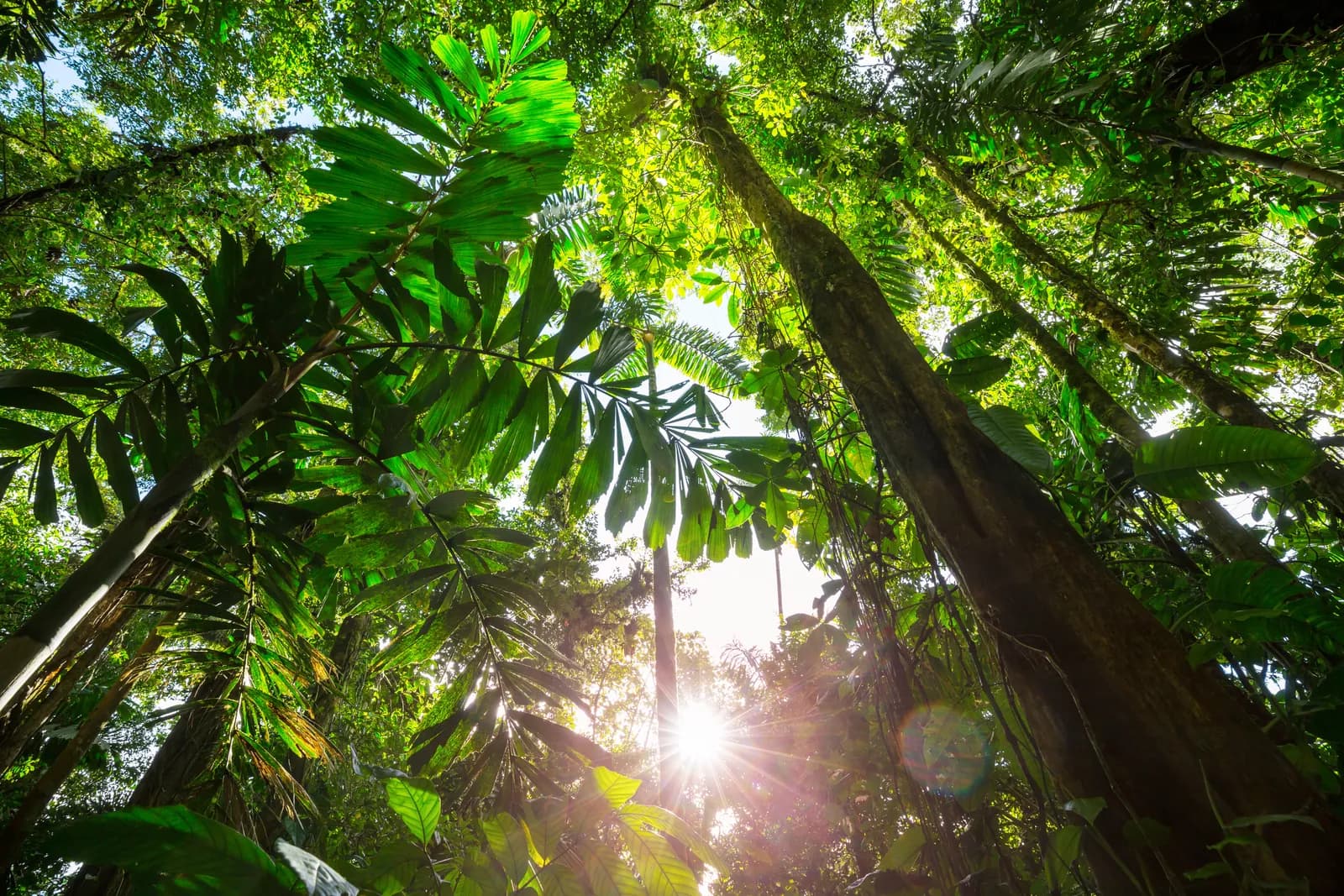
Costa Rica is roughly the size of West Virginia yet holds about 5% of the planet's known biodiversity across twelve life zones. That density is the whole argument for a one-week route: you can walk a hardened lava field in the morning, soak in geothermal hot springs that evening, and two days later watch a squirrel monkey cross a branch above the Pacific.
The second reason is structural. The Cordillera de Tilaran and the Cordillera Central mean there is rarely a straight line between two points. This circuit moves in one continuous loop, north, then southwest, then back to the Central Valley, so you never retrace a road. It also protects you from weather: if rain closes in on Arenal, the cloud forest and the coast are still ahead.
Best suited to: first-time visitors, couples, families with children over six, and anyone who wants nature, adventure and rest without repacking every night.
Is One Week Enough to Visit Costa Rica?
It is enough to see three signature regions extremely well. It is not enough to see the whole country, and anyone who tells you otherwise is selling you a bus schedule.
The rule we use when we build itineraries: a maximum of three destinations in seven days, with at least two nights in each. One-night stays sound efficient until you spend the day checking in, unpacking and checking out.
A week comfortably covers two or three ecosystems, three or four parks and reserves, and four or five signature activities. It does not cover the Caribbean coast, the Osa Peninsula and Guanacaste as well. Those belong to a longer version of this route.
One honest note: if you land after 4:00 p.m. or leave before 10:00 a.m., those are travel days, not touring days. A seven-day trip usually means about five and a half usable ones, and this itinerary is built for that reality.
Suggested Route Overview
San Jose to La Fortuna and Arenal (3 nights), across Lake Arenal to Monteverde (1 night), south to Manuel Antonio and Quepos (2 nights), then back to San Jose for your flight home.
| Leg | Distance | Realistic time | Best option |
|---|---|---|---|
| SJO to La Fortuna | 165 km | 3 h 30 min | Private transfer or rental car |
| La Fortuna to Monteverde | ~120 km by road | 3 to 3.5 h | Jeep-boat-jeep across Lake Arenal |
| Monteverde to Manuel Antonio | ~180 km | 4 to 4.5 h | Private transfer or rental car |
| Manuel Antonio to SJO | 167 km | 3 h | Route 34 and Route 27, or a SANSA flight |
Total time on the road: roughly 14 to 15 hours across four transfer days. Add Guanacaste or the Caribbean to the same week and you pass 24 hours behind the wheel. The distances and journey times above are the ones we publish on our own transfer pages, measured on the routes we drive every week rather than estimated from a map.
Why this direction? Your longest stay comes first, when jet lag is worst, and finishing on the Pacific means your final days are the most relaxed. Quepos also has an airstrip, so departure day can shrink from three hours to twenty-five minutes.
Want this week without the logistics? ISA Travel can customize every detail: accommodation, private transportation between each stop, and guided tours matched to your pace.
Day 1: Arrival and Transfer to La Fortuna
Juan Santamaria International Airport (SJO) to La Fortuna, 165 km and about 3 h 30 min. Immigration typically takes 30 to 60 minutes, and in high season you should allow 90. Skip the airport exchange counters: withdraw colones from a bank ATM or pay by card, which works almost everywhere.
The drive north. The scenic route runs via Naranjo, Zarcero and Ciudad Quesada on Route 141. Zarcero deserves twenty minutes: the topiary garden in front of the church, sculpted by the same family for decades, is one of the strangest and most charming sights in the Central Valley. Expect fog on the high stretches after 3:00 p.m., so headlights on and no overtaking on curves.
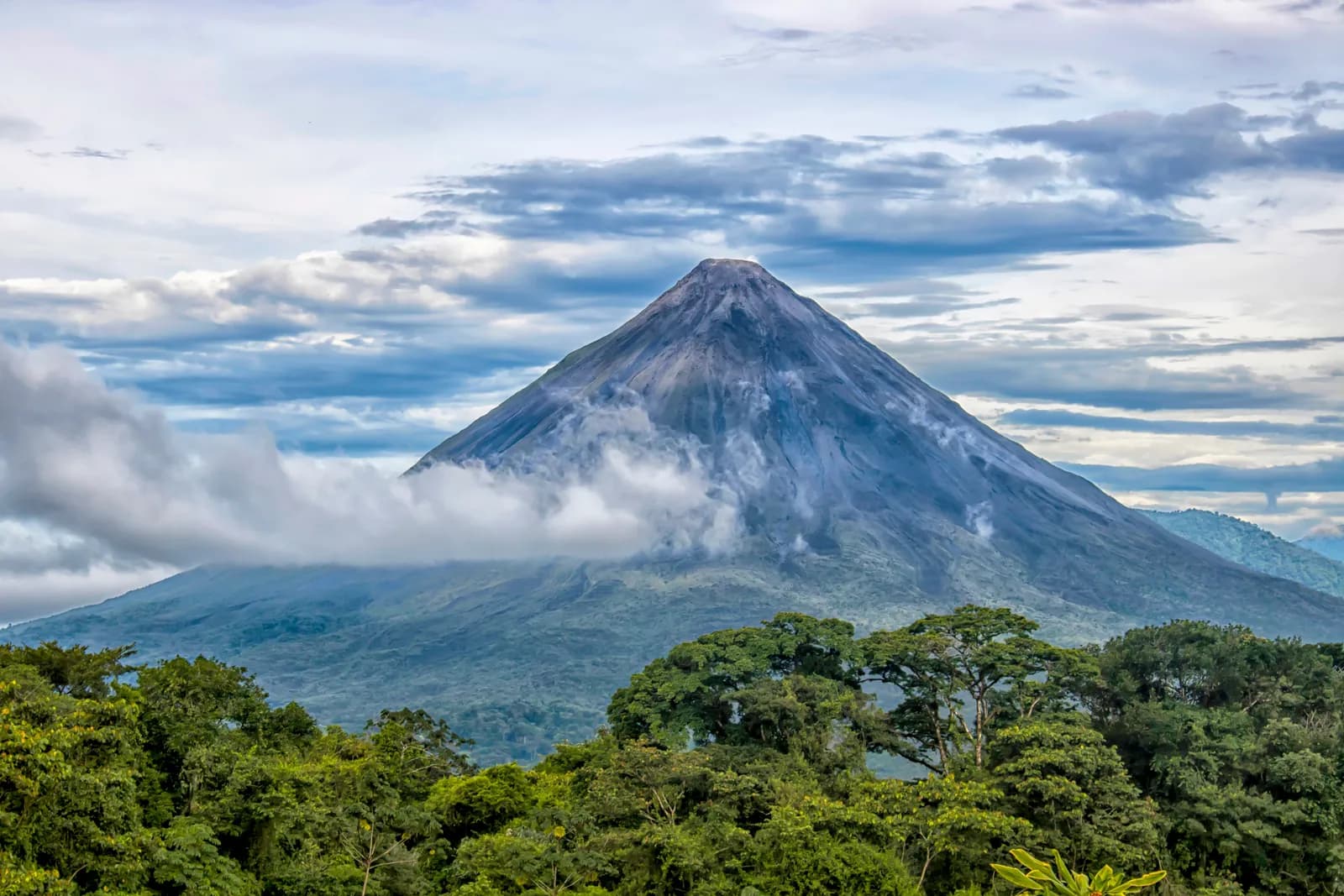
Getting there. Our private transfer from San Jose runs $200 and covers 1 to 4 passengers, with $10 for each additional passenger from the fifth onward. On arrival you will know the moment the near-perfect cone of Arenal appears on your right. At 1,633 meters it dominates the town. It has been resting since 2010, so there is no lava, but the silhouette at sunset is the image people take home.
Tonight, do nothing ambitious. Walk the parque central, then end the day in hot springs. If you arrive early, the free thermal river beside the Tabacon bridge, which locals call El Chollin, is the real local experience. Take it seriously though: no lifeguards, slippery rocks, water that rises fast after rain, and nothing valuable left in the car.
Where to eat: a casado at Soda Viquez ($8 to $10) is how Costa Ricans actually eat lunch. For something special, Don Rufino, or El Novillo del Arenal, an open-air grill with the volcano as your dinner view.
Day 1 tips: ask which direction your room faces, because "volcano view" is applied generously. Sunset falls between 5:15 and 6:00 p.m. year-round. Buy repellent and water in town, not at your hotel. Our complete La Fortuna guide covers the town in far more depth.
Day 2: Arenal Volcano, Waterfall and Hot Springs
Done in this order the day flows beautifully. Done backwards, you climb 500 stairs in 32 degree afternoon heat.
Morning: Arenal Volcano National Park, 8:00 a.m.
Go at opening. Mornings are clearest, and by 11:00 the cone is usually wrapped in cloud.
- Entrance: $15 plus 13% tax for adult foreigners, about $17; $5 plus tax for children. Bring a card.
- Hours: the Volcano Sector opens 8:00 a.m. to 4:00 p.m. and the Peninsula Sector 8:00 a.m. to 5:00 p.m., with last entry at 4:00 p.m. One ticket covers both sectors if you visit them the same day, but confirm at the gate.
Walk the Sendero Coladas across the 1968 lava flow to the mirador, then the Ceibo Trail to a 400-year-old ceiba with buttress roots taller than a person. Climbing the cone is illegal and has killed people. For wider lava fields with fewer people, the private Arenal 1968 reserve ($25) and Mirador El Silencio ($10) are both excellent. Fees, hours and reservations for every national park are published by SINAC.
Midday: La Fortuna Waterfall
The Rio Fortuna drops about 70 meters into a turquoise pool inside a reserve run by ADIFORT, the local community association, so your fee stays in La Fortuna. Entrance is $18 for adults and $5 for children.
The stairs are the story: roughly 500 of them, 15 minutes down and 25 to 35 back up. This is genuine exercise, and the steps are wet stone, so wear shoes with grip. Swimming is allowed when conditions permit, but the current at the base is stronger than it looks.
Evening: hot springs
Arenal's geothermal system feeds some of the best hot springs in the Americas. Tabacon has the loveliest natural-river setting, Ecotermales is small, quiet and reservation-only, Baldi is big and lively, and Los Laureles is simple, local and great value.
Local tip: arrive after 5:00 p.m. Day passes are often cheaper, the heat has broken, and steam rising off the water in the dark is the entire point.
Day 3: Adventure Day in La Fortuna
Your one fully free day. Choose the trip you actually want.
Easy pace. Mistico Arenal Hanging Bridges Park is the region's best trail system: 3.2 km through primary rainforest with sixteen bridges, several level with the canopy. Go on the first entry of the morning, when howler monkeys are calling and the trail is empty. Hire the on-site naturalist guide, the highest-value $25 you will spend in Costa Rica. Guides carry spotting scopes and will find an eyelash viper on a leaf you walked past three times. Without one, most visitors see beautiful forest and very few animals.
Adrenaline. Canyoneering in the Lost Canyon, rappelling waterfalls up to 60 meters ($110 to $140); whitewater rafting on the Balsa, Class II to III and family-friendly, or the Sarapiqui, Class III to IV ($75 to $110); ziplines and the Sky Tram.
Day trips. Rio Celeste in Tenorio Volcano National Park, where two streams meet and the river turns an unreal turquoise: two hours each way plus a muddy 6 km hike, and after heavy rain the color washes out, so ask locally first. Or the Penas Blancas safari float, a gentle two-hour drift that reliably delivers sloths and toucans. You can book either as part of one of our guided day tours.
Tonight: book a rainforest night walk ($30 to $45). Around 80% of the animals here are nocturnal, and two hours with red-filtered flashlights turns up red-eyed tree frogs, kinkajous and sleeping toucans.
Day 3 tips: book through your hotel or an operator licensed by the Costa Rican Tourism Board (ICT), never from someone flagging you down on the street. In green season, rain arrives around 2:00 p.m., so schedule the outdoors before noon and you will barely notice it. Our guide to the best time to visit explains the pattern month by month.
Day 4: Crossing Lake Arenal to Monteverde
La Fortuna to Monteverde, 3 to 3.5 hours. Leave by 8:00 a.m. The two towns sit almost opposite each other, separated by Lake Arenal and a mountain range. Driving around the lake takes 3.5 to 4.5 hours. Take the jeep-boat-jeep instead: 25 to 30 minutes by minibus to the dock, 30 to 45 minutes across the lake with the volcano behind you, then 60 to 90 minutes up the mountain to Santa Elena.
Shared service runs $33 to $40 per person, usually departing around 8:00 a.m. and 2:00 p.m. Take the morning departure and you arrive by 11:00 a.m. with your afternoon intact. Bring a light jacket, because the wind across the lake is cold even on a hot day.
Arriving in the cloud forest. Monteverde is a region, not a town. The commercial hub is Santa Elena; Monteverde proper is the small community up the hill, settled in the 1950s by Quaker families who founded the dairy that still makes the region's famous cheese. Check where your hotel actually sits, because the difference is fifteen minutes of steep road.
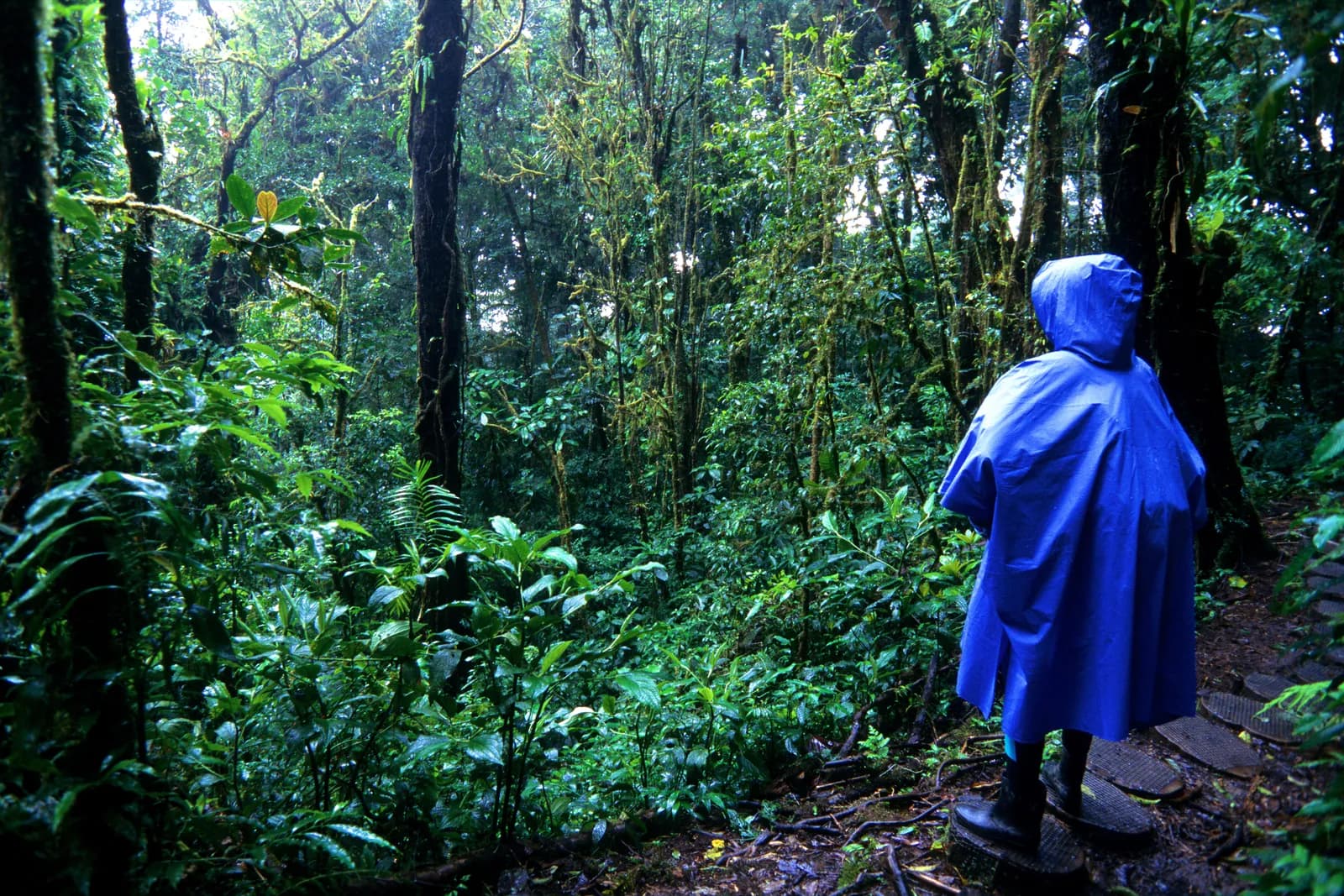
At 1,400 to 1,800 meters, expect 16 to 22 degrees Celsius, constant mist, and serious wind from December to February. Locals call the fine horizontal drizzle pelo de gato, cat's hair. It is not rain. It is simply the weather.
This afternoon: ziplines at Selvatura or 100% Aventura, including some of the longest cables in Latin America; Curi-Cancha Reserve, quieter than the main reserve and, in season, one of the best places in the country for a resplendent quetzal; or a coffee and chocolate tour at Cafe Monteverde or El Trapiche. For dinner, Sabor Tico for comida tipica. Our complete Monteverde guide covers all of it.
Day 4 tips: fill your tank in La Fortuna or Tilaran, because stations are sparse up here. The main access road via Sardinal is paved, but secondary roads around Santa Elena are still gravel. And book tomorrow morning tonight: cloud forest capacity is capped and it sells out.
Day 5: Cloud Forest, then South to Manuel Antonio
The reserve, at 7:00 a.m.
The Monteverde Cloud Forest Biological Reserve, established in 1972 and managed by the Tropical Science Center, protects around 10,500 hectares straddling the continental divide, with over 2,500 plant species and more than 400 birds, sustained by moisture blown in from the Caribbean and caught by the mountains.
A 2026 update most guides have not caught: since December 2025 the reserve no longer sells an all-trails day pass. It now sells three timed, one-way circuits at roughly $29 per adult with no re-entry: the Essence Trail (1.4 km, waterfall), the Heart of the Forest Trail (2.8 km, hanging bridge) and the Continental Divide Trail (4.1 km, hanging bridge). You also check in at the Harriot Powell Visitor Center, about 1.6 km before the old entrance, where there is free parking and a shuttle to the trailhead. Book online, take the earliest slot, and arrive on time.
Why 7:00 a.m. matters: visibility is best before the mist thickens, and birds are active at first light. The resplendent quetzal is most reliable from March through June, peaking around April during nesting season. By 10:00 a.m. you are walking through a beautiful grey cloud. If you would rather have fewer people, the community-run Santa Elena Reserve and Curi-Cancha are both outstanding and considerably quieter.
Midday: the drive south
Leave around 11:00 a.m. The road descends to the Pan-American Highway, joins Route 27, then follows the Costanera Sur (Route 34) down the coast through Jaco into Quepos. Worth a stop: the crocodile bridge over the Rio Tarcoles, where real American crocodiles are visible from the walkway.
Late afternoon: Manuel Antonio
The temperature will have climbed fifteen degrees since breakfast, because the coast runs 24 to 33 degrees Celsius with heavy humidity. Check in, swim, and take the sunset from a hillside restaurant along the Quepos to Manuel Antonio road: El Avion, built around a Fairchild C-123 cargo plane, or Ronny's Place for the best view over two bays.
Day 5 tips: this is the one day the itinerary breaks its own two-night rule. If you would rather give Monteverde a full day, trim a night in La Fortuna instead. Buy your park tickets tonight at the latest. And note that rip currents are the leading cause of tourist drownings here, and Playa Espadilla, the public beach, has strong ones. If you are caught in one, swim parallel to the shore. Our honest guide to safety in Costa Rica goes into this properly.
Day 6: Manuel Antonio National Park
Be at the gate at 7:00 a.m.
Manuel Antonio is the smallest of Costa Rica's national parks and the most biodiverse per hectare, with over 100 mammal species and nearly 200 birds in about 16 square kilometers. It is also the best realistic place to see three of the country's four monkey species: the mantled howler, the white-faced capuchin, and the endangered Central American squirrel monkey, or mono titi, which exists only along this stretch of Pacific and on the Osa Peninsula.
What you must know before you go:
- The park is closed on Tuesdays. It opens Wednesday to Monday, 7:00 a.m. to 4:00 p.m. If day 6 lands on a Tuesday, swap it with day 5.
- Tickets are sold online only, through the official SINAC platform. There is no booth at the gate, capacity is capped, and slots regularly sell out one to four weeks ahead in high season.
- Entrance is $18.08 for adults, about $5.65 for children aged 2 to 12.
- Beaches close at 3:00 p.m., and everyone exits by 4:00. Tickets are single entry.
Hire a certified guide: $25 to $35 per person for a two-and-a-half to three-hour walk, and the difference is not subtle. Guides carry high-magnification scopes, digiscope photos onto your phone, and spot sloths you would walk beneath a hundred times. Book in advance, and be wary of anyone in ranger-style clothing selling tickets near the entrance, because the park has a persistent problem with unauthorized vendors.
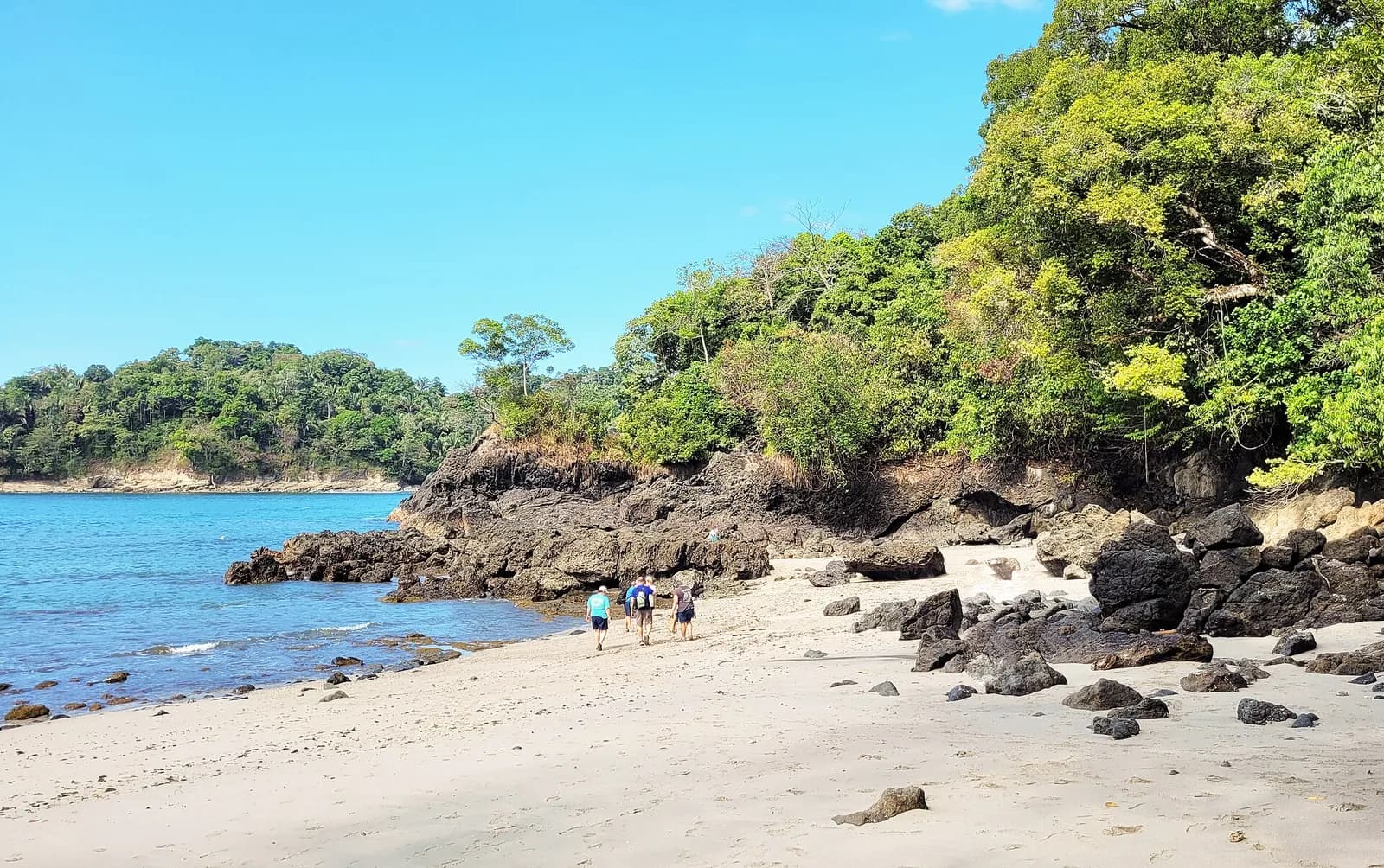
Inside, the Sendero Principal runs about 2.2 km to Playa Manuel Antonio. Branch onto the Punta Catedral loop for the viewpoint over the tombolo, the sand bridge connecting a former island to the mainland. Playa Manuel Antonio itself is calm, protected and one of the loveliest swimming beaches in the country, so get there before 10:00 a.m. Two rules matter more than the rest: do not feed the wildlife, which spreads disease, causes aggression and is illegal, and keep your bag zipped and on your shoulder, because the capuchins here are expert thieves.
Afternoon alternatives: Playa Biesanz, a calm cove outside the park reached by a ten-minute forest trail, or a Damas Island mangrove tour for silky anteaters and boat-billed herons.
Day 6 tips: wildlife peaks from 6:00 to 9:00 a.m. and again after 3:30 p.m. At midday, the forest sleeps. Bring reef-safe sunscreen, 1.5 liters of water per person and a dry bag. Glass, alcohol and drones are prohibited.
Day 7: Return to San Jose
By road. Route 34 north along the coast, then Route 27 into the Central Valley: 167 km and about 3 hours in normal conditions. Two warnings. Route 27 backs up badly on Sunday afternoons as the country returns from the beach, and morning fog slows the descent into the valley. Our private transfer on this route runs $225 and covers 1 to 4 passengers.
By air. SANSA flies Quepos (XQP) to San Jose in about 25 minutes, usually $80 to $130. Baggage limits are strict, roughly 30 lb checked plus a personal item. For a family with heavy luggage a private transfer is simpler; for a couple who want three extra hours, the flight is a gift.
Timing. be at the airport three hours before an international flight. A 1:00 p.m. departure means leaving Manuel Antonio by 6:00 a.m.; a 5:00 p.m. departure means leaving by 9:30 with time for lunch. Anything before 11:00 a.m. and you should spend the last night near the airport in Alajuela instead.
If you have a few hours, stop in Jaco for breakfast or visit a Central Valley coffee plantation. Do your souvenir shopping before the airport, and spend your leftover colones, because exchanging them back is a losing proposition.
Estimated Budget for One Week
Costa Rica is not a budget destination by Central American standards, but it is excellent value for what you get: real conservation infrastructure, genuinely trained guides, safe water and reliable services.
Figures are per person in US dollars, excluding international flights, based on two people traveling together. December to April and July carry a premium.
| Budget | Mid-range | Luxury | |
|---|---|---|---|
| Accommodation | $30 to $50 / night | $110 to $180 / night | $400 to $900+ / night |
| Meals | $20 to $30 / day | $50 to $75 / day | $130 to $250 / day |
| Transport (week) | $120 to $180 | $350 to $550 | $900 to $1,600 |
| Parks, guides, tours | $150 to $250 | $400 to $600 | $1,200 to $2,500 |
| Week total | $700 to $1,050 | $1,600 to $2,400 | $4,500 to $9,000+ |
Mid-range is where most first-time visitors land, and where the value curve is steepest.
Fixed costs everyone pays: Arenal Volcano National Park $15 plus tax; La Fortuna Waterfall $18; the Monteverde circuit about $29; Manuel Antonio $18.08; a hot springs day pass $30 to $110; a certified guide $25 to $40; a zipline $50 to $90; canyoneering $110 to $140.
Money notes: restaurants add 10% service and 13% IVA automatically, and that service charge is the tip. Guides and drivers are customarily tipped 10%. Cards work almost everywhere, but carry about $100 in small bills for parking, tips and rural stops.
Transportation Tips
There is no single best answer. There is a best answer for your trip.
Private transfer, the default for seven days. Best for couples, families and first-timers. A driver handles mountain roads, one-lane bridges and the total absence of street addresses in Costa Rica, where directions are given by landmarks and "200 meters north of the old fig tree" is a real address. On this route our published fares are $200 for San Jose to La Fortuna, $250 for Monteverde and $225 for Manuel Antonio, each covering 1 to 4 passengers with $10 per extra passenger from the fifth. On a week-long trip, where every wasted hour costs a meaningful share of your vacation, this is usually the highest-value money you spend.
Rental car, freedom with fine print. Best for confident drivers and trips longer than ten days. Two things catch people out. Mandatory liability insurance is not optional and is not covered by your credit card, so a $12 per day online rate becomes $50 to $70 per day at the counter. And a high-clearance vehicle is genuinely useful for Monteverde's secondary roads. At one-lane bridges, CEDA EL PASO means you yield. Never leave anything visible in a parked car, because break-ins at trailheads and beaches are the most common crime against tourists.
Shared shuttle, the value sweet spot. Tourist minibuses run hotel to hotel between every stop on this route, typically $55 to $70 per person per leg. You are on their schedule, but it is comfortable, safe and far better than the public bus network for a week-long trip.
Domestic flights, buying back time. SANSA connects Quepos, Tamarindo and Drake Bay to San Jose in 20 to 45 minutes. Small aircraft are weather-sensitive in green season, so never book one that connects tightly to an international flight.
Packing Tips
You will pass through three climates in seven days: humid lowland rainforest at 30 degrees, cool windy cloud forest at 16, and a hot, humid Pacific coast. Pack in layers, not categories.
Non-negotiable: a light hooded rain jacket, because an umbrella is useless in Monteverde wind; closed hiking shoes with real grip, since the waterfall stairs and cloud forest trails are slick; quick-dry clothing, because cotton does not dry here in green season; reef-safe sunscreen and strong repellent; a dry bag; a refillable bottle, since tap water is safe throughout this route; binoculars, which transform every guided walk; and a light fleece for Monteverde, which visitors consistently underpack for. For forecasts close to your dates, the Instituto Meteorologico Nacional is the official source.
Two local details: many rural properties ask you to bin toilet paper rather than flush it, so follow the sign rather than your instincts. And plugs are the same 120V two-prong type used in the United States, so North American travelers need no adapter.
Common Mistakes Travelers Make
- Trusting map app drive times. They do not account for cargo trucks on mountain grades, road works or fog. Add 30 to 40% to every estimate.
- Adding the Caribbean or Guanacaste. Puerto Viejo is 4.5 hours from San Jose in the opposite direction, which means two of your seven days spent driving.
- Not pre-booking Manuel Antonio tickets. They are online only, capacity is capped, and they sell out. Travelers are turned away at the gate every day.
- Arriving at Manuel Antonio on a Tuesday. The park is closed. Check the day of the week before you book flights.
- Renting a car without understanding mandatory insurance. Get the full quote in writing before you arrive.
- Booking a hotel “in Manuel Antonio” that is 25 minutes away. The road is 7 km long and every hotel on it uses the same name, so check the map pin.
- Skipping guides to save money. Without one you see green. With one you see three sloths, a viper and a family of squirrel monkeys.
- Feeding monkeys or coatis. It spreads disease, causes aggression, and it is against the law.
- Underestimating the sun. You are nine degrees north of the equator, and UV is extreme even under cloud.
- Ignoring rip currents. Most Pacific beaches have no lifeguards, so ask locally which are safe.
- Booking tours from street vendors. Unlicensed operators carry no insurance, and torn US bills are frequently rejected, so use cards and ATMs.
- Assuming green season means constant rain. It usually means brilliant mornings, afternoon storms, lower prices and far fewer people.
- Planning departure day too tightly. It is the most common way a great trip ends badly.
Alternative 7-Day Itineraries
Adventure. San Jose to La Fortuna (3 nights) to Turrialba (2 nights) and back. Trade the cloud forest for whitewater: Turrialba is home to the Pacuare River, regularly ranked among the world's best runs, where a two-day trip includes a night at a lodge reachable only by raft.
Luxury. San Jose to Arenal (3 nights) to Papagayo or the Central Pacific (3 nights). Fewer stops, better properties, private transfers throughout, and a private naturalist guide for the whole week rather than per activity.
Families. San Jose to La Fortuna (4 nights) to Manuel Antonio (2 nights). Drop Monteverde: the road is long, the weather is cold and wet, and children rarely love a cloud forest as much as their parents do. Give La Fortuna four nights, with hanging bridges, a safari float, hot springs with waterslides and a night walk, then two easy days on the beach. Total driving: about six hours all week.
Couples. San Jose to Arenal (3 nights) to Manuel Antonio or Santa Teresa (3 nights). Slow it down: private hot springs, a sunrise canopy walk, then the coast. Manuel Antonio for wildlife and comfort, Santa Teresa for surf-town sunsets.
Wildlife lovers. San Jose to Boca Tapada (2 nights) to La Fortuna and Cano Negro (2 nights) to Monteverde (2 nights). Boca Tapada is the country's best site for the endangered great green macaw, and Cano Negro's wetlands hold enormous concentrations of waterbirds. With ten days, swap the ending for Corcovado National Park, which requires a certified guide and advance permits.
Any of these can be built as a private, fully guided trip. Browse our multi-day Costa Rica packages to see what a finished week looks like.
Frequently Asked Questions
Is 7 days enough to visit Costa Rica?
Yes, for three regions explored well. One week comfortably covers a volcano region, a cloud forest and a Pacific national park with time to enjoy each one. It is not enough to also include the Caribbean coast, Guanacaste and the Osa Peninsula. Depth beats breadth on a seven-day trip.
What is the best time of year for this itinerary?
December to April is the dry season: reliable sun, the clearest volcano views and the highest prices. May to November is the green season, lush, cheaper and quieter, with rain that usually falls in the afternoon. September and October are the wettest months on the Pacific, and there is a drier spell from mid-June to mid-July that locals call the veranillo.
Should I rent a car or book private transfers?
For seven days, transfers or shuttles usually win. Mountain roads, landmark-based addresses and mandatory insurance that multiplies advertised rental rates all add friction you do not have time for. Rent a car if you are a confident driver with flexible plans or are staying longer than ten days.
How much does a 7-day trip to Costa Rica cost?
Excluding international flights, roughly $700 to $1,050 per person for budget travel, $1,600 to $2,400 for mid-range, and $4,500 and up for luxury. Most first-time visitors land in the mid-range bracket.
How long is the drive from San Jose to La Fortuna?
About 165 kilometers and 3 hours 30 minutes by private transfer, via Naranjo, Zarcero and Ciudad Quesada. Allow extra if you are driving yourself, because fog on the high stretches after 3:00 p.m. slows everyone down.
Is Costa Rica safe for tourists?
It is among the safest countries in Latin America and has had no standing army since 1948. The realistic risks are petty theft and natural hazards such as rip currents and slippery trails. Emergency services answer at 911 nationwide.
Do I need a visa?
Citizens of the United States, Canada, the United Kingdom and most European Union countries do not, and are typically granted up to 180 days on arrival at the officer's discretion. You need a passport valid for your stay and proof of onward travel. Confirm current rules before departure.
Do I need vaccinations, and is the tap water safe?
No vaccinations are required for travelers arriving from North America or Europe; a yellow fever certificate applies only when arriving from certain countries in South America and Africa. Tap water is safe to drink on this entire route.
Can I see both coasts in one week?
Technically yes, practically no. Roughly eight hours of driving separates them, so including both means spending two full days in transit. Choose one and save the other for a return trip.
Will I see lava at Arenal?
No. Arenal entered a resting phase in 2010 after 42 years of near-continuous activity. It still emits steam and gas, but you will be walking the hardened 1968 lava fields rather than watching new ones.
When can I see a resplendent quetzal?
From March through June, peaking around April during nesting season. Go at first light with a guide who carries a spotting scope. Curi-Cancha and the Santa Elena Reserve are often better bets simply because they are quieter than the main reserve.
Which day is Manuel Antonio National Park closed?
Manuel Antonio is closed on Tuesdays. It opens Wednesday to Monday from 7:00 a.m. to 4:00 p.m., with beaches closing at 3:00 p.m. Tickets must be bought in advance through the official SINAC platform, because there is no ticket booth at the entrance.
What should I book in advance?
Manuel Antonio tickets first, then your Monteverde circuit, accommodation between December and April, the Lake Arenal crossing, hot springs and any capacity-limited tour. Everything else can usually be arranged locally with a day's notice.
Final Thoughts
A well-built week in Costa Rica is not about squeezing in more places. It is about choosing the right three, connecting them with the shortest sensible roads, and leaving space for the country to surprise you, which it will, usually around 6:30 in the morning, when the howler monkeys start and the mist lifts off the forest.
What we hope you take from this guide is not just the schedule but the small things: leave early, hire the guide, respect the ocean, add 40% to every drive time, and eat at the soda with the plastic chairs and no menu. That is where the country actually lives.
Pura vida.
Ready to turn this into your trip? ISA Travel designs fully personalized Costa Rica itineraries with private transportation, hand-picked accommodation, licensed local guides and support before, during and after your journey. Tell us how you like to travel and we will build the week around it. → Contact ISA Travel
A local team that has been planning and running trips across Costa Rica since 2014.