Why Visit Costa Rica? 12 Reasons It Stands Out in Central America (2026)

Short answer: Costa Rica is the easiest place in the Americas to see an extraordinary amount of nature in a short trip, and to do it safely and comfortably. It is a small, stable democracy with no army since 1948, about a quarter of its land under protection, roughly 5% of the world's known species, two coastlines, active volcanoes and cloud forest, all within a few hours of one international airport. In 2025 it generated 98.6% of its electricity from renewable sources, and in 2026 it ranked first in the world on the Happy Planet Index.
We are ISA Travel, a Costa Rican tour operator that has been moving travelers around this country since 2014. We drive these roads every week, so this guide is not a brochure. It explains what genuinely sets Costa Rica apart from its neighbors, where another destination might suit you better, and the honest trade-offs you should know before you book.
Table of Contents
- Costa Rica at a Glance
- 12 Reasons to Choose Costa Rica
- Costa Rica vs Other Destinations in the Region
- The Honest Trade-offs
- Who Costa Rica Is Best For
- How to Get Around Costa Rica
- Plan Your Trip with a Local Team
- Frequently Asked Questions
- Final Thoughts
Costa Rica at a Glance
| Fact | Detail |
|---|---|
| Size | About 51,100 km², slightly smaller than West Virginia |
| Biodiversity | Around 5% of the planet's known species on roughly 0.03% of its surface |
| Protected land | About 25% of the national territory, managed by SINAC |
| Electricity | 98.6% renewable in 2025 (hydro, geothermal, wind, biomass and solar) |
| Army | None. Abolished in 1948 |
| Entry for US, Canadian and most EU citizens | No visa; stays of up to 180 days at the officer's discretion |
| International airports | San José (SJO) and Liberia (LIR) |
| Currency | Costa Rican colón; US dollars and cards widely accepted |
| Time zone | UTC-6 all year, no daylight saving time |
| Plugs | Type A and B, 120 V, the same as the United States |
| Language | Spanish; English widely spoken in tourism |
12 Reasons to Choose Costa Rica
1. More wildlife per hour of travel than almost anywhere
Plenty of countries have rainforest. What makes Costa Rica different is density. Because the country is small and its mountains create dozens of microclimates, you cross completely different ecosystems in a few hours of driving: lowland rainforest, dry tropical forest, cloud forest above 1,400 meters, mangroves, wetlands and coral coast.
The practical result is that wildlife is not a lucky bonus here; it is part of an ordinary day. Sloths, white-faced capuchins, howler monkeys, toucans, scarlet macaws, poison dart frogs and coatis are routine sightings on a guided walk. The country records more than 900 bird species in an area smaller than West Virginia, and all four of its monkey species can be seen in a single week.
2. Two coasts, volcanoes and cloud forest in one small country
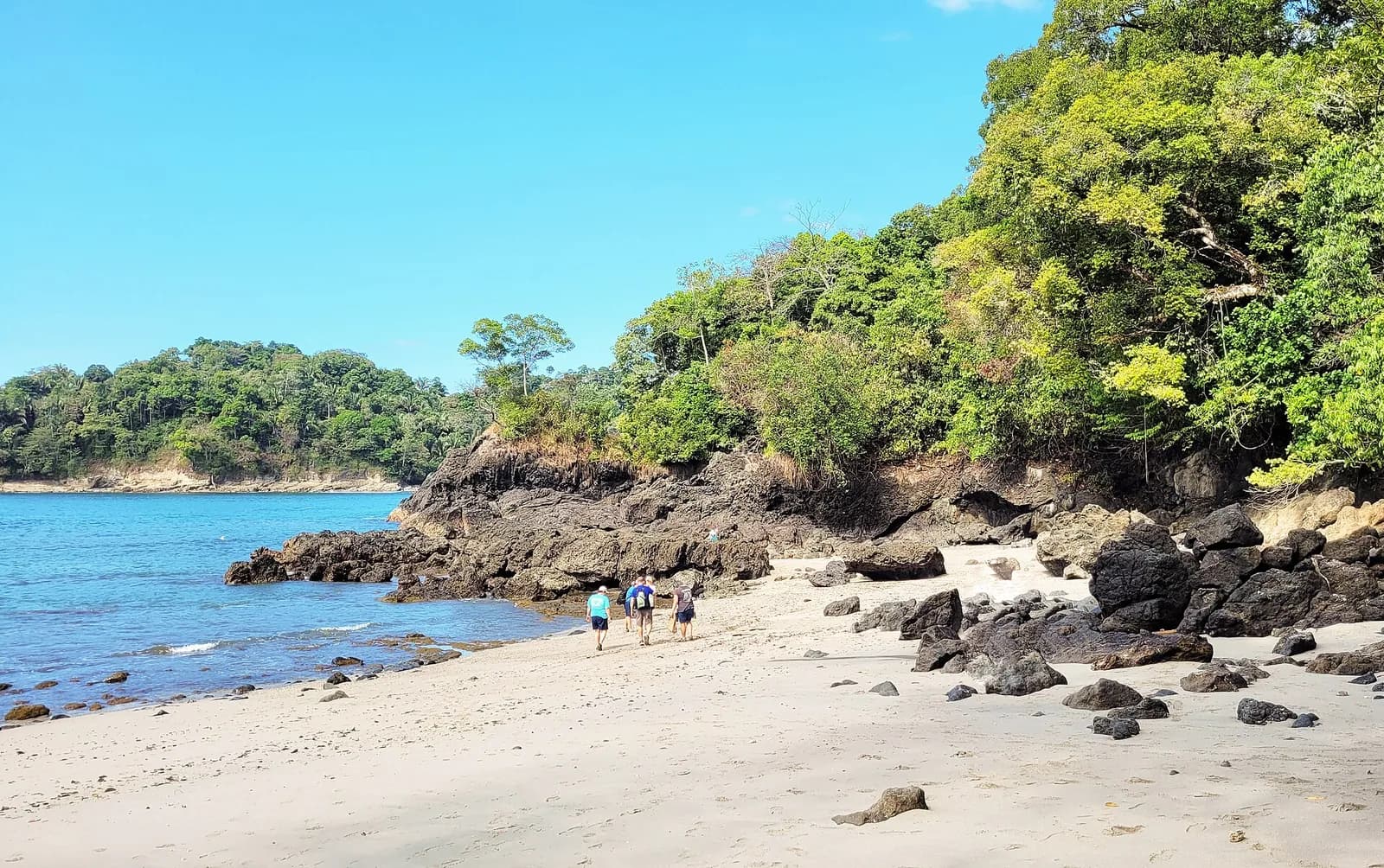
From San José you can reach the foot of Arenal Volcano in about three and a half hours, the Monteverde cloud forest in a similar time, the Pacific beaches of Manuel Antonio in about three hours, and the Caribbean canals of Tortuguero by the middle of the afternoon. Few places on earth let you combine a volcano, a cloud forest and a tropical beach in one week without a single domestic flight.
That is why our 7-day Costa Rica itinerary links three ecosystems in one loop, and why a first trip rarely needs more than one internal transfer per destination.
3. A conservation model the world studies
In the 1980s Costa Rica had one of the highest deforestation rates in the world, and forest covered only about a fifth of the country. Today it covers more than half. The turnaround came from policy, not luck: the 1996 Forestry Law created a national program of payments for environmental services, run by FONAFIFO and partly funded by a fuel tax, which pays landowners to protect and restore forest. In 2021 that program won the Earthshot Prize for protecting and restoring nature.
For a traveler, this means that the forest you walk through is protected by law and by economics. National parks, biological reserves and wildlife refuges cover about a quarter of the land, managed by the National System of Conservation Areas (SINAC).
4. Almost all of its electricity is clean
According to the national electricity institute, ICE, Costa Rica generated 98.6% of its electricity from renewable sources in 2025, mainly hydroelectric power, plus geothermal energy from its volcanoes, wind, biomass and a small share of solar. The country has exceeded 95% renewable generation in most years for over a decade. The honest caveat: transport still runs largely on fossil fuels, so the country is not carbon neutral, but its power grid is among the cleanest in the world.
5. No army since 1948, and a long democratic tradition
Costa Rica abolished its army in 1948 and redirected that budget into education and health care. It has held regular, peaceful elections ever since, one of the longest uninterrupted democratic records in Latin America. In 1987 its president Óscar Arias received the Nobel Peace Prize for his role in ending the Central American conflicts.
For visitors, that history translates into something practical: political stability, functioning institutions and a tourism industry that has been able to grow steadily for decades.
6. One of the safer choices in the region
Costa Rica is not crime-free, and we will never tell you it is. The U.S. Department of State keeps it at Level 2, "Exercise Increased Caution", mainly because of petty theft and some violent crime, and it also flags dangerous surf. But the risks that most affect travelers are well understood and easy to manage: never leave belongings in a parked car, use licensed transport and respect rip currents. Our full guide, Is Costa Rica Safe to Visit?, covers it in detail.
7. Easy to reach and easy to travel
There are nonstop flights to San José from dozens of cities in the United States and Canada and from several European hubs, such as Madrid, Amsterdam and Frankfurt. A nonstop flight from Miami takes around three hours. Citizens of the United States, Canada, the United Kingdom and most of the European Union do not need a visa.
Once you land, travel is simple. US dollars and cards are accepted almost everywhere, English is spoken throughout the tourism industry, tap water is safe to drink in most of the country, and plugs are the same as in North America. Costa Rica stays on UTC-6 all year, which keeps jet lag minimal for travelers from the Americas.
8. Adventure for every level
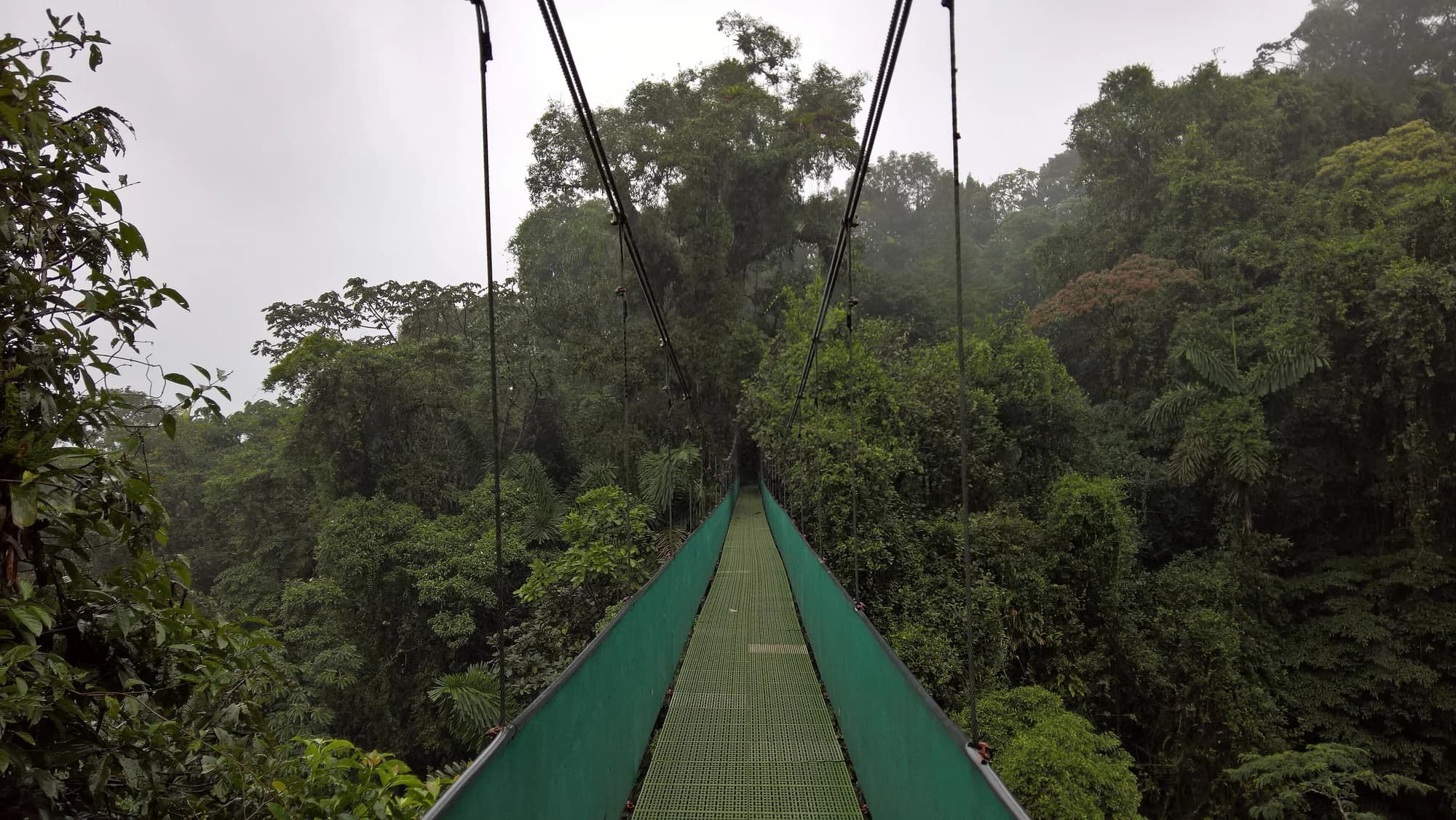
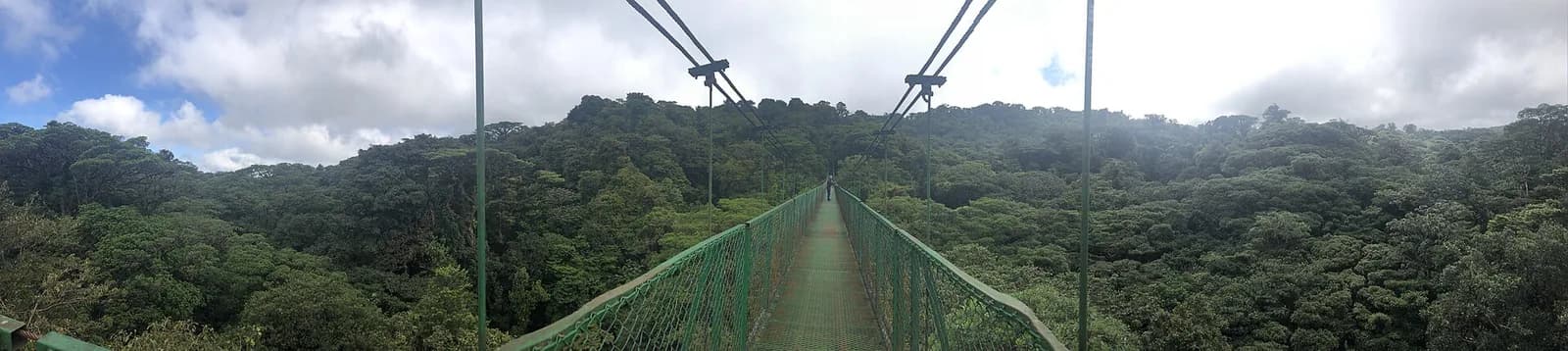
The canopy zipline tour was popularized in Costa Rica, and the country still offers more adventure variety in a small area than almost anywhere: white-water rafting, hanging bridges, canyoning, waterfall rappelling, surfing on both coasts, diving, kayaking and horseback riding. What matters for families and first-timers is that most of it is run by certified operators with real safety standards, and almost every activity has an easy version. You can choose a gentle float or class IV rapids.
9. Hot springs heated by volcanoes
Around Arenal and Rincón de la Vieja, rain filters into the volcanic ground and comes back up as natural hot springs. After a day of hiking, an evening soak in thermal pools with a view of the volcano is one of those experiences that is hard to find elsewhere in Central America. Our La Fortuna guide compares the main springs.
10. "Pura vida": people who make you feel welcome
Costa Ricans, who call themselves ticos, are known for their warmth and for a phrase that works as hello, goodbye, thank you and a whole philosophy: pura vida. The 2026 Happy Planet Index ranks Costa Rica first out of 147 countries, measuring how well a country delivers long, happy lives without consuming more than its share of the planet's resources. The Nicoya Peninsula is one of the world's five recognized "Blue Zones", where an unusually high share of people live past 90.
You feel it in small things: the family-run soda serving gallo pinto and a casado at lunch, a guide who stops the van because he spotted a sloth, a stranger who walks you to the bus stop instead of just pointing.
11. Good health care and a reliable infrastructure
Costa Rica's universal health system and its private hospitals give it a life expectancy comparable to that of the United States, and medical care in San José is of a high standard. Roads are slower than maps suggest, but the main tourist routes are paved, the mobile network covers the regions most visitors travel to, and the tourism industry is regulated by the Costa Rican Tourism Institute (ICT), which licenses operators like us.
12. A destination for every month
Costa Rica has no single "season". The dry months from December to April are the most popular, but the green season brings lower prices, fewer crowds, sea turtle nesting in Tortuguero and humpback whales in the Pacific, and the Caribbean coast often enjoys its best weather in September and October, when the rest of the country is at its wettest. Our month-by-month guide explains the details.
Costa Rica vs Other Destinations in the Region
Every country in the region is worth visiting, and some will suit you better than Costa Rica. Here is our honest comparison, written by a team that also sells trips abroad.
| Destination | Where it stands out | Where Costa Rica stands out |
|---|---|---|
| Mexico | Maya archaeology, colonial cities, cuisine, all-inclusive beach resorts and cheaper flights | Wildlife density, protected rainforest and cloud forest, volcanoes and adventure within short distances |
| Belize | The barrier reef, diving and snorkeling, English as the official language, Maya sites | Far greater variety of landscapes, volcanoes, cloud forest and a larger tourism infrastructure |
| Panama | The canal, a modern capital, San Blas and Bocas del Toro islands | More national parks with trails and guides, more developed nature tourism, easier multi-region routes |
| Guatemala | Living Maya culture, Tikal, Antigua and Lake Atitlán, lower prices | A lower travel advisory level, easier logistics for families and first-time visitors |
| Nicaragua | Colonial Granada, lakes and volcanoes at lower prices | More international flights, more tourism services and greater stability for planning |
The pattern: if your priority is ancient ruins, colonial architecture or the lowest possible budget, Mexico, Guatemala or Nicaragua may be the better choice. If your priority is nature, wildlife, adventure and peace of mind, with the logistics already solved, Costa Rica is the strongest option in Central America.
The Honest Trade-offs
A guide that only lists advantages is not worth trusting, so here is what we tell our own clients before they book:
- It is not the cheapest country in the region. Hotels, tours and restaurants in tourist areas cost more than in Guatemala or Nicaragua, closer to US prices. Eating at local sodas and traveling in the green season help a lot.
- Distances are measured in hours. A 150 km drive usually takes three hours or more because of mountains and two-lane roads. Plan fewer destinations, not more.
- It rains. This is a rainforest country. In the green season, mornings are usually clear and the rain arrives in the afternoon.
- Popular places get busy. Manuel Antonio and the Monteverde reserves have daily capacity limits and require tickets in advance in high season.
- There are no large ancient ruins. Costa Rica's appeal is its nature, not its archaeology.
Who Costa Rica Is Best For
- First-time visitors to Latin America, who want an easy, safe introduction to the tropics.
- Families with children, thanks to short distances, varied activities and good health care.
- Couples and honeymooners who want to combine adventure, hot springs and beach.
- Nature lovers, birders and photographers, who will find wildlife in every region.
- Travelers who care about sustainability and want their money to support conservation.
- Older travelers and slow travelers, who can see a great deal without long walks or flights.
How to Get Around Costa Rica
You have three main options, and the right one depends on your group and your style:
- Private transfer: door to door, with a professional driver who knows the roads. It is the most comfortable option and, for groups of three or four, often costs about the same as renting a car with insurance and fuel. ISA Travel publishes fixed prices for private transfers from San José to 34 destinations. Each fare covers 1 to 4 passengers, with USD 10 per additional passenger from the fifth.
- Rental car: maximum flexibility, but you will drive mountain roads, sometimes at night and in the rain, and mandatory local insurance adds significantly to the advertised price.
- Shared shuttle or public bus: the most economical, but slower and with fixed schedules.
As a reference, the main routes we drive: San José to La Fortuna is 165 km and about 3 h 30 min; San José to Monteverde is 152 km and about 3 h 30 min; and San José to Manuel Antonio is 167 km and about 3 hours.
Plan Your Trip with a Local Team
ISA Travel is a Costa Rican receptive tour operator based in San José, operating since 2014 and licensed by the Costa Rican Tourism Institute (ICT) under tourism declaration DGRE-0174-2026. We design trips for travelers who want to see the real country without worrying about logistics:
- Private transfers from San José and the airport to 34 destinations, with fixed, published prices.
- Day tours from San José with local guides: Arenal and its hot springs, Irazú Volcano, Poás and La Paz Waterfall Gardens, Río Celeste, the Caribbean, Carara and the Tárcoles crocodiles, and Tortuga Island.
- Multi-day packages of 7 to 12 days that combine volcanoes, cloud forest, rainforest and beach, adapted to your dates and pace.
You can learn more about our team and how we work on our About us page, and about how we try to keep our trips good for the country on our sustainability page.
Frequently Asked Questions
Why is Costa Rica so popular with travelers?
Because it combines extraordinary biodiversity, two coasts, volcanoes and cloud forest in a small, stable and easy-to-travel country. About a quarter of its land is protected, it has had no army since 1948, and most visitors see sloths, monkeys and toucans within days of arriving.
What makes Costa Rica different from other Central American countries?
The combination of nature density, conservation and stability. Other countries may offer more archaeology or lower prices, but none concentrates so many ecosystems, protected areas and tourism services in such a small area, with a long democratic tradition and no army.
Is Costa Rica better than Mexico for a vacation?
It depends on what you want. Mexico wins on archaeology, colonial cities and all-inclusive beach resorts. Costa Rica wins on rainforest, wildlife, volcanoes and adventure, and is better suited to travelers who want to spend their time in nature.
Is Costa Rica safe for tourists?
Generally yes, with normal precautions. The U.S. State Department rates it Level 2, "Exercise Increased Caution". The main risks for visitors are petty theft and natural hazards such as rip currents. Use licensed transport and never leave belongings in a parked car.
Is Costa Rica expensive?
It is more expensive than its neighbors and closer to US prices in tourist areas. Mid-range travelers should budget more than they would for Guatemala or Nicaragua. Traveling in the green season and eating at local sodas reduces costs significantly.
Do I need a visa to visit Costa Rica?
Citizens of the United States, Canada, the United Kingdom and most European Union countries do not. They can usually stay up to 180 days, at the discretion of the immigration officer. You need a valid passport and proof of onward travel. Confirm current rules before you fly.
How many days do I need in Costa Rica?
Seven days is the minimum to enjoy two or three regions without rushing; ten to fourteen days lets you add a second coast or a remote area such as Tortuguero or the Osa Peninsula. As a rule, plan at least two nights in each destination.
What is the best time to visit Costa Rica?
December to April is the driest and most popular period. May to November is the green season, with lower prices, afternoon rain and great wildlife. September and October are often the best months on the Caribbean coast.
Is Costa Rica really a sustainable destination?
Largely yes. It generated 98.6% of its electricity from renewable sources in 2025, it has more than doubled its forest cover since the 1980s, and it pays landowners to protect forest. Transport still depends on fossil fuels, so choosing certified operators and local suppliers still matters.
Do I need a car to travel around Costa Rica?
No. Private transfers, shuttles and tours with hotel pickup cover every main destination. A private transfer is usually the most comfortable choice for families and groups, and avoids driving mountain roads at night.
Can you drink the tap water in Costa Rica?
Yes, in most of the country, including San José and the main tourist areas. In some remote or coastal communities, bottled or filtered water is advisable.
Do people speak English in Costa Rica?
Spanish is the official language, but English is widely spoken in hotels, tours and restaurants in tourist areas. Learning a few words in Spanish, starting with "pura vida", is always appreciated.
Final Thoughts
Costa Rica is not the biggest, cheapest or most ancient country in the region. Its advantage is different: it decided decades ago to protect its forests, invest in its people instead of an army, and build tourism around nature. The result is a country where you can wake up to howler monkeys, cross a volcano landscape by lunchtime and end the day in a hot spring, with the logistics simple enough to enjoy every minute.
If you are choosing between destinations in Central America and nature is what you are after, our advice as locals is simple: come to Costa Rica, choose fewer places, stay longer in each one and let the country surprise you.
Pura vida.
Ready to plan your Costa Rica trip? ISA Travel is an ICT-licensed Costa Rican operator with over ten years of experience. We organize private transfers, day tours and multi-day itineraries built around your dates and interests. → Contact ISA Travel
A local team that has been planning and running trips across Costa Rica since 2014.